


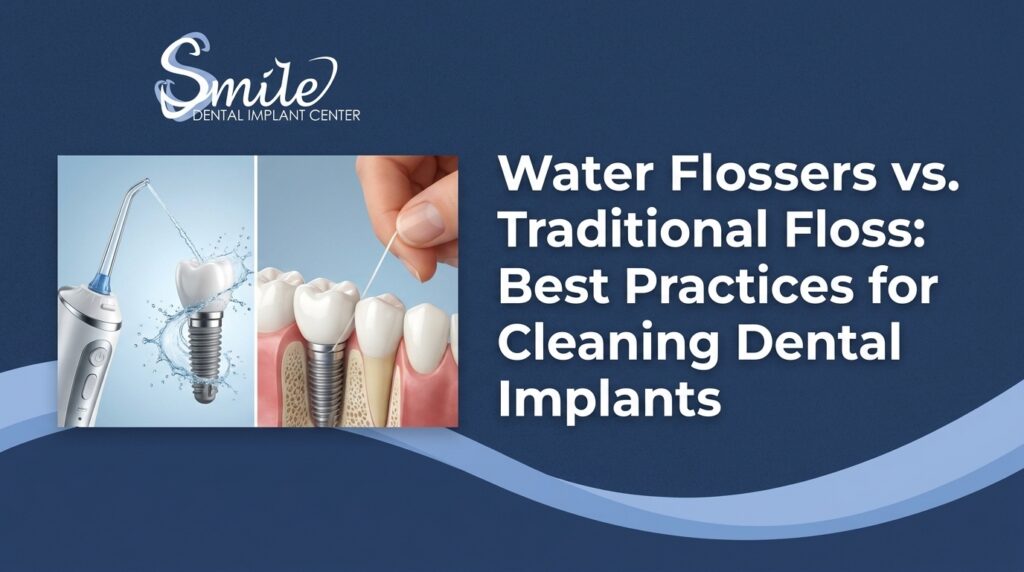
Caring for a dental implant requires a different approach than maintaining natural teeth, primarily because the attachment between the implant and your gum tissue is uniquely fragile. When food particles and plaque accumulate around the base of an implant crown, the resulting bacteria can trigger peri-implantitis—an inflammatory condition that threatens the bone supporting your restoration. To protect this investment in your smile, establishing a rigorous interdental cleaning routine is non-negotiable. Patients often ask us how to optimize their daily hygiene, specifically focusing on Water Flossers vs. Traditional Floss: Best Practices for Cleaning Dental Implants. By understanding the mechanics of both tools, we can help you keep the surrounding gum tissue healthy and ensure your implants last a lifetime.
The Importance of Interdental Cleaning for Dental Implants
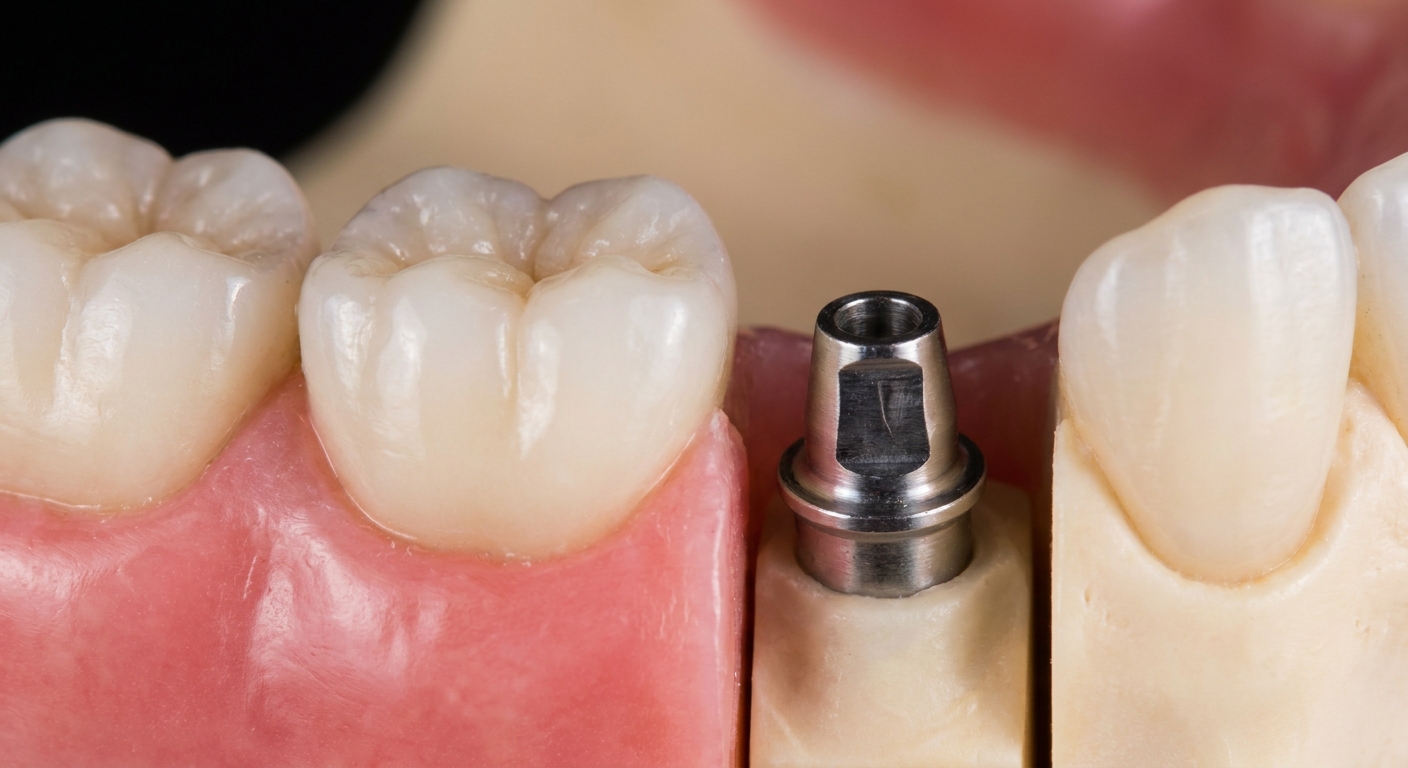
Unlike natural teeth, dental implants do not have a periodontal ligament. This ligament normally acts as a physical barrier and provides a robust blood supply to fight off bacterial infections. Because implants rely on a more delicate mucosal seal, any plaque that breaches the gumline can cause rapid bone loss. Brushing alone is insufficient because toothbrush bristles cannot reach the interproximal spaces between your teeth or deep into the gum pockets. Removing this hidden plaque daily is the single most critical step in preventing peri-implant mucositis and ensuring the long-term success of your dental work.
Traditional Dental Floss: Pros and Cons for Implant Care
Benefits of Manual Plaque Control
Traditional string floss has been the standard for interdental cleaning for decades. When used correctly, waxed nylon or PTFE floss allows you to wrap the string in a “C-shape” around the tooth or implant crown. This physical scraping motion is highly effective at dislodging the sticky biofilm of plaque that adheres to smooth surfaces. For natural teeth, this manual control is often unmatched in its ability to wipe the tooth clean before plaque hardens into tartar.
Risks of Floss Shredding Around Implant Crowns
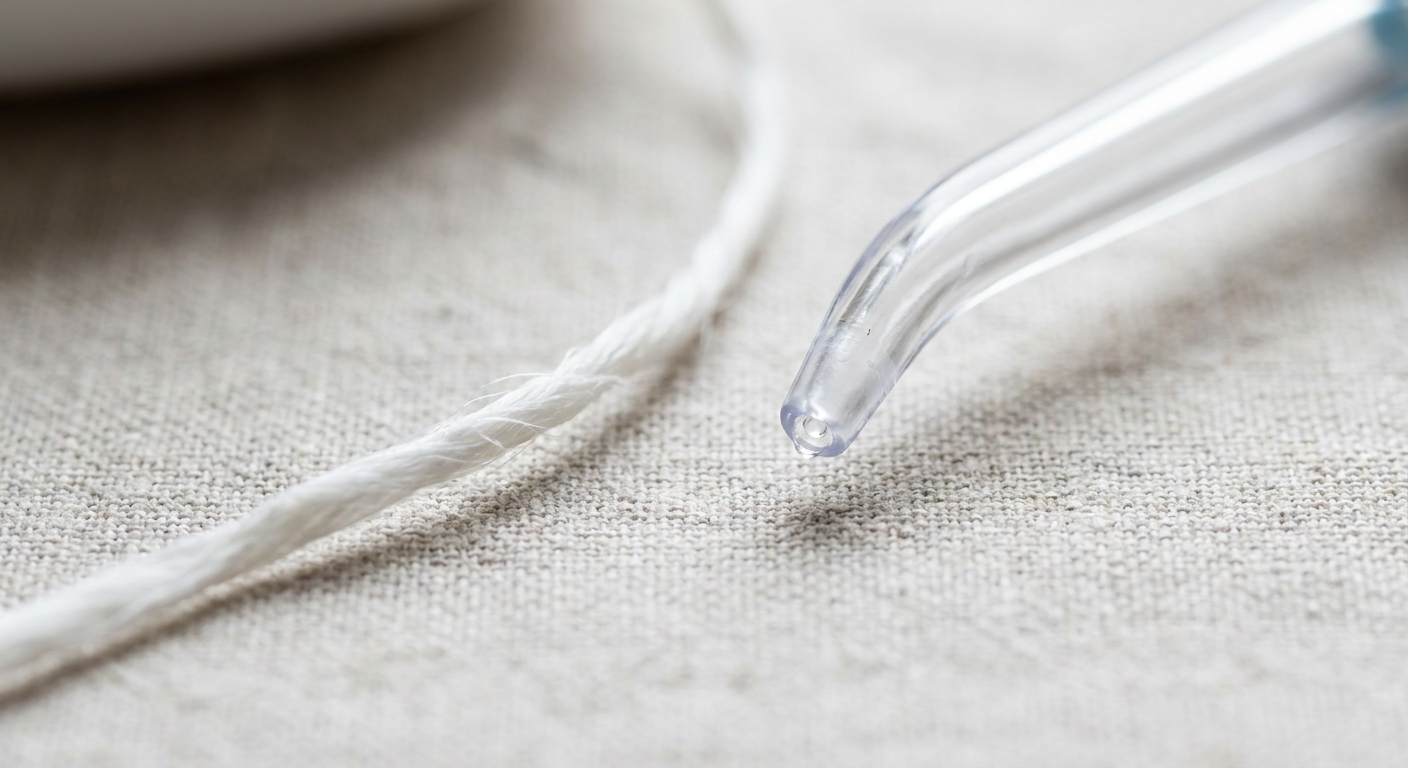
Despite its benefits for natural teeth, traditional floss carries specific risks when used around dental implants. The junction where the implant crown meets the titanium abutment can sometimes have microscopic rough edges or incredibly tight contacts. When pulling string floss through these areas, the material can easily shred or fray. If a microscopic piece of floss tears off and remains trapped in the peri-implant pocket, it acts as a foreign body. This trapped filament quickly becomes a breeding ground for bacteria, potentially leading to a severe and rapid localized infection.
Water Flossers: How Oral Irrigators Benefit Dental Implants
Safely Flushing Periodontal Pockets
Water flossers, also known as oral irrigators, utilize a pulsating stream of water to clean between teeth and below the gumline. This technology is particularly beneficial for implant patients because the pressurized water can reach deep into periodontal pockets—often up to 6 millimeters—flushing out unattached plaque, bacteria, and food debris. Unlike string floss, the liquid stream easily navigates around the complex anatomy of implant-supported restorations without the need for physical scraping.
Protecting Surrounding Gum Tissue
The pulsating action of a water flosser is incredibly gentle on the fragile mucosal seal surrounding an implant. It stimulates the gum tissue, promoting healthy blood flow while safely clearing away irritants. Most importantly, oral irrigators eliminate the risk of leaving shredded material behind in the sulcus, providing a safe, frictionless method for daily maintenance.
Water Flossers vs. Traditional Floss: Which is Better for Implants?
When directly comparing water flossers and traditional floss for implant maintenance, oral irrigators generally offer a safer and more effective solution for the unique challenges of implant anatomy. As a practice that has successfully treated over 150,000 patients, we have observed firsthand that individuals who utilize water flossers around their implants experience significantly fewer incidents of peri-implant inflammation. We rely on this extensive clinical data to tailor hygiene plans that prioritize the longevity and safety of your restorative work.
Comparing Plaque Reduction Efficacy
While string floss is excellent for scraping sticky plaque off natural enamel, water flossers excel at flushing out bacteria from the deep crevices and tight spaces inherent to implant dentistry. Studies have shown that water flossers are highly effective at reducing gingival bleeding and inflammation, which are the primary precursors to implant failure.
Safety Considerations for Implant Longevity
The deciding factor in the debate of Water Flossers vs. Traditional Floss: Best Practices for Cleaning Dental Implants often comes down to safety. The zero-risk profile of water flossers regarding shredded filaments makes them the superior choice for safeguarding the delicate tissue attachment around your titanium posts.
Step-by-Step Best Practices for Cleaning Dental Implants
Establishing a Daily Implant Hygiene Routine
Consistency is the foundation of oral health. A robust daily routine should include the following steps:
- Brush twice daily with a soft-bristled toothbrush and a low-abrasive toothpaste.
- Use your water flosser at least once a day, preferably in the evening before brushing.
- Rinse with an antimicrobial mouthwash if recommended by your dental professional.
By flushing the area first, you dislodge food particles and plaque, allowing your toothpaste to better reach all surfaces of the implant.
Proper Techniques for Single Implants and Bridges
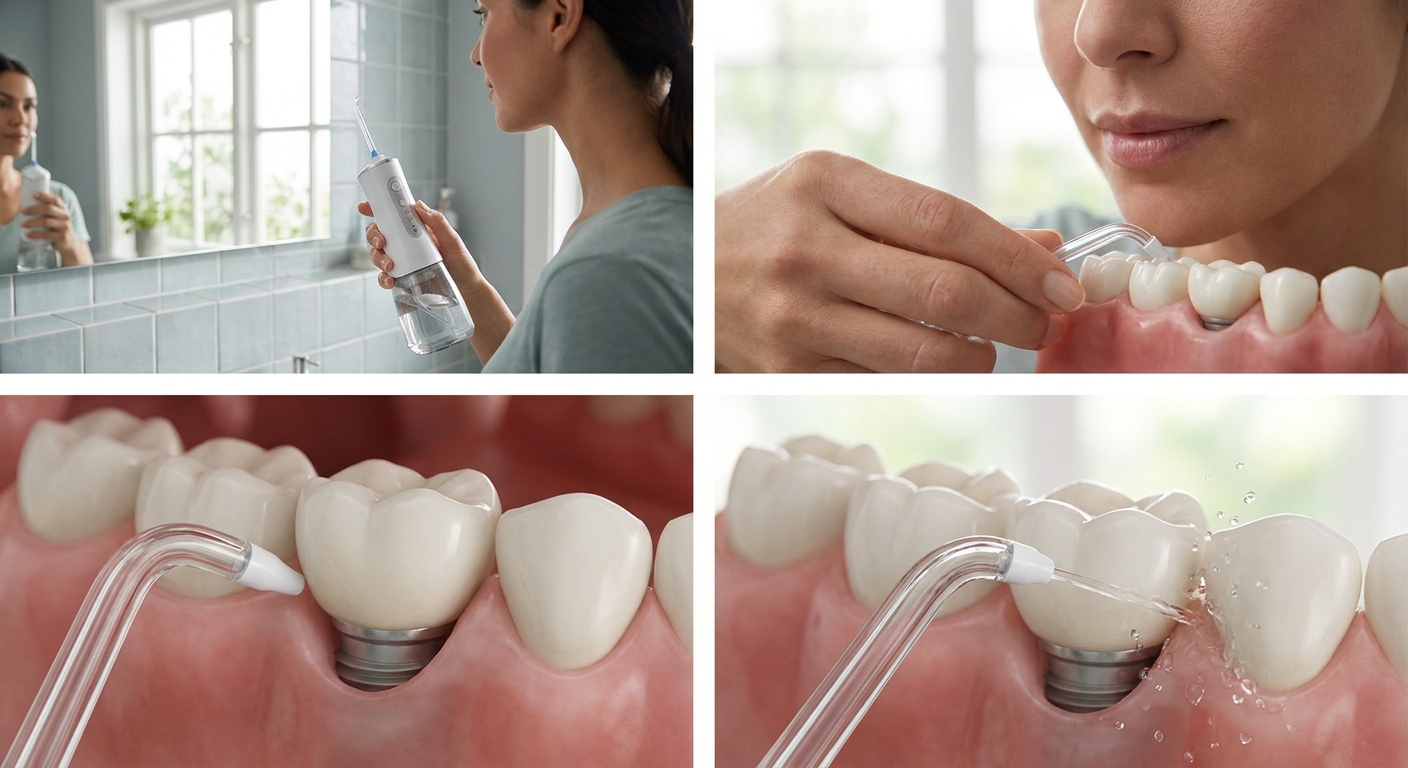
For single implants, fill your water flosser reservoir with warm water, select a low to medium pressure setting, and aim the tip at a 90-degree angle to the gumline. Trace the margin of the implant crown slowly, pausing briefly between teeth. If you have an implant-supported bridge, use a specialized plaque-seeker tip designed for implants. Direct the stream underneath the pontic (the false tooth) to flush out any debris trapped between the bridge and your gums.
Overcoming Dexterity and Gum Sensitivity Challenges
Many patients struggle with the fine motor skills required to properly maneuver string floss, especially those with arthritis or joint pain. Water flossers provide an ergonomic alternative that requires minimal dexterity to achieve a professional-level clean. If you suffer from gum sensitivity, the adjustability of an oral irrigator is a major advantage. By using warm water and starting on the lowest pressure setting, you can comfortably massage sensitive gums while still achieving a thorough interdental cleanse.
Maintaining Your Dental Implants: The Role of Professional Care
While mastering your at-home routine is vital, it must be paired with regular professional oversight. During your checkups, our dental hygienists use specialized instruments made of plastic or titanium that safely remove hardened calculus without scratching the surface of your implants. We also monitor your bone levels and gum attachment to catch any early signs of inflammation before they progress. We encourage you to schedule your next professional cleaning to complement your at-home efforts and keep your smile healthy for years to come.