


Most people cannot tell a well-matched dental implant from a natural tooth, even at close conversation distance. The secret is not a generic “perfect tooth” but a restoration that reproduces the color, contour, and gum line of the specific space it fills.
The honest answer to will my dental implant look natural? is yes—when we design the crown for your mouth rather than fitting a stock replacement. Below, we explain how we match restorations to your existing teeth so the result disappears into your smile.
Will My Dental Implant Look Natural?
The Goal: Indistinguishable from Natural Teeth
We plan every implant restoration with one objective: a tooth that a casual observer cannot distinguish from the ones next to it. That means the crown must not only resemble a tooth, but resemble your tooth—the one that belongs in that exact spot. A restoration that fits seamlessly into your smile also feels more comfortable and functions better when chewing or speaking.
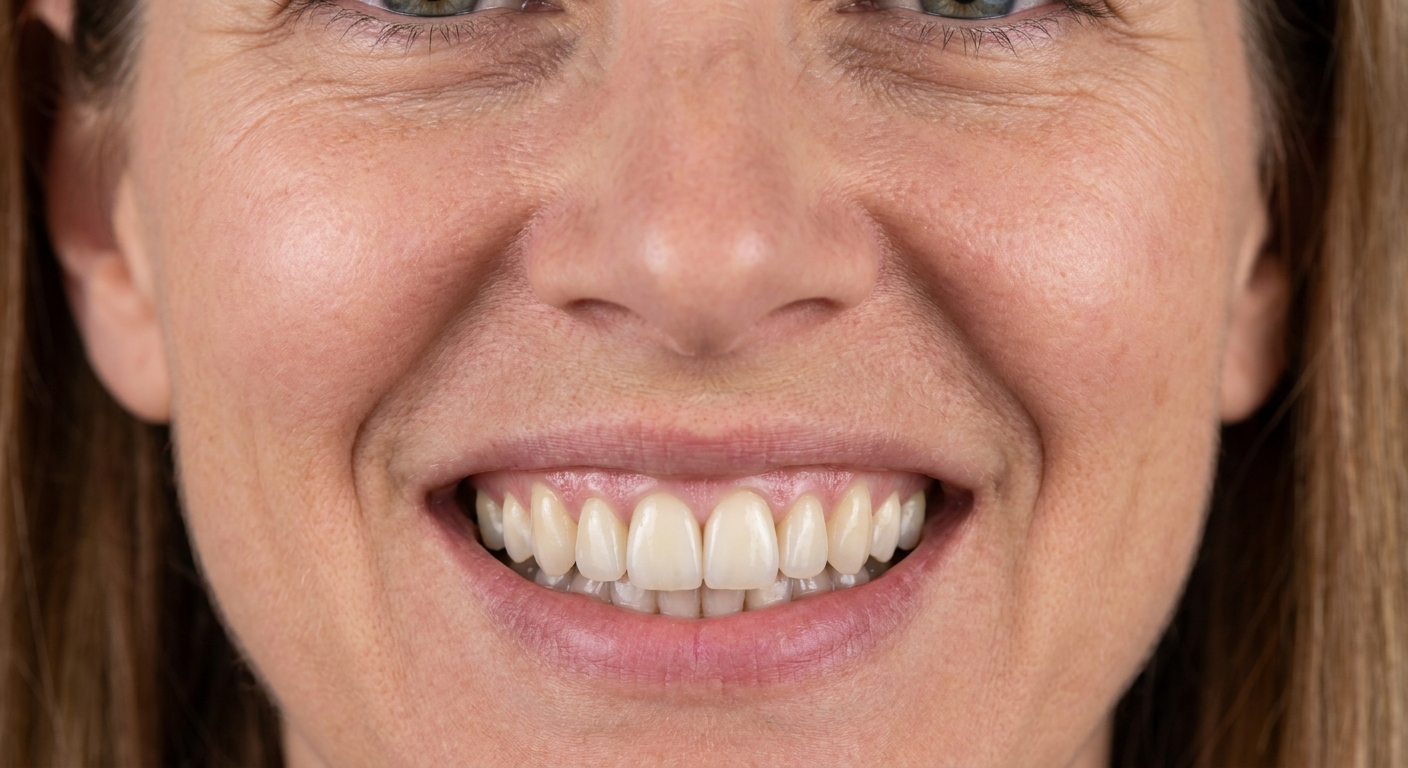
Factors That Contribute to a Natural Appearance
Several details work together to make an implant look real:
- Crown material: porcelain or ceramic reflects and transmits light like natural enamel.
- Shade accuracy: color is matched to the specific neighboring teeth, not just a generic “A2” shade.
- Shape and contour: the crown mirrors the shape, width, and curvature of adjacent and opposite teeth.
- Gum emergence: the crown appears to grow out of the gum with a natural scallop, not a straight edge.
- Alignment and bite: the implant is positioned so the tooth sits in line with the rest of your smile and meets the opposing teeth correctly.
Patient Expectations and Realistic Outcomes
We set expectations early: after the implant is placed, there is a healing period before the final crown is made. During that time, you may wear a temporary tooth. The final result looks most natural once the gum has fully healed and settled around the restoration. Minor adjustments after delivery are normal and help us fine-tune the fit and appearance.
How We Match the Color of Your Restoration to Existing Teeth
Comprehensive Shade Analysis
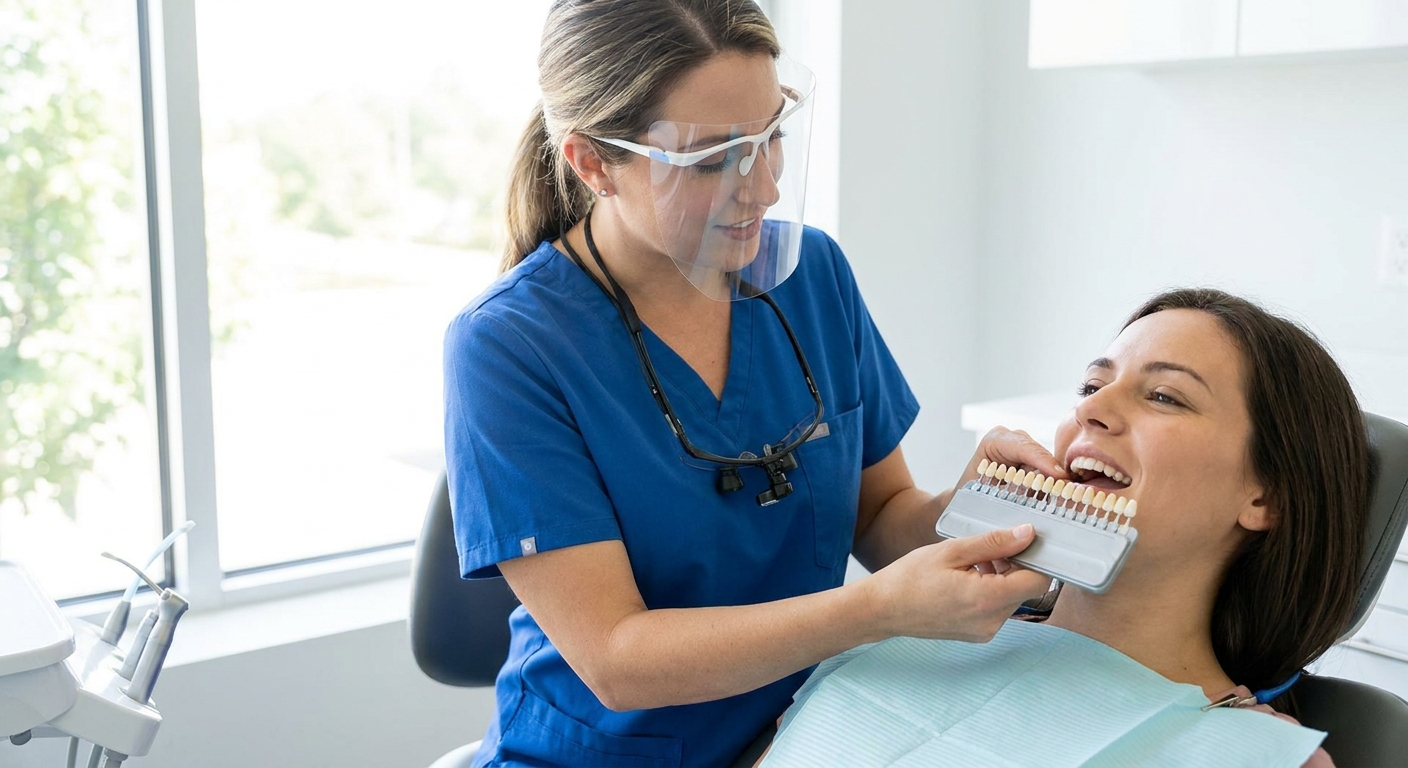
We do not rely on a single shade tab held up for a few seconds. Instead, we evaluate the adjacent teeth under multiple light sources—natural daylight, dental operatory light, and diffused indoor light—because color perception shifts with lighting. We also note the tooth’s translucency, opacity, surface texture, and any natural staining patterns, since a uniform color looks artificial.
Custom Color Mapping for Each Tooth
Natural teeth are rarely one flat color. The neck near the gum is often more yellow or orange, the body has the dominant hue, and the biting edge may be more translucent or have white flecks. We map these zones for the lab so the technician can layer ceramic exactly where each shade belongs. For a front tooth, we may take high-resolution digital photos with a shade tab in the same frame for precise reference.
Using Natural Light and Digital Tools for Accuracy
Beyond our eyes, we use a digital spectrophotometer to measure the exact color of your teeth and send those values to the laboratory. This removes guesswork when the lab is not in the room. We also check color under different lighting before final cementation and after gum healing, because the pink of the gum can influence how the tooth color is perceived.
How We Match Shape, Size, and Alignment
Mirroring the Contours of Adjacent Teeth
We measure the width, length, and buccal contour of the teeth on either side of the gap and, when possible, the same tooth on the opposite side of your mouth. The crown’s silhouette should continue the visual rhythm of your smile, so we compare the new tooth to both neighbors, not just one.
Customizing Proportions for Your Smile
Beyond copying a neighboring tooth, we consider your facial shape, lip line, and how much tooth shows when you smile or talk. A restoration that is too short or too square will stand out even if the color is perfect. We adjust the length and width to fit your overall facial proportions and the curvature of your smile arc.
Ensuring Proper Alignment and Bite
The implant must be placed at an angle and depth that allow the crown to emerge in the correct position. We use digital planning and, when needed, guided surgery to place the implant precisely. After the crown is attached, we check your bite in all movements to ensure the restoration does not hit too hard or too early, which could cause discomfort or premature wear.
The Role of Gum Tissue Design in a Natural Look
Creating a Natural Gumline Around the Implant
Even a flawless crown looks wrong if the gum around it is flat, receded, or puffy. We place the implant at a depth that allows the gum to scallop around the neck of the crown the way it does around a natural tooth. Sometimes we shape or graft soft tissue before or during implant placement to build a more natural architecture.
Managing Gum Contours for Realistic Emergence
The “emergence profile” is the path the crown takes as it rises from the implant through the gum. We use custom healing abutments or temporary crowns that sculpt the tissue into a natural funnel shape. This creates a smooth transition without a visible step or dark shadow at the gum line.
The Importance of Healthy Gum Tissue
Healthy gum around an implant is pink, firm, and tightly adapted to the crown. We monitor this tissue carefully because inflammation—known as peri-implantitis—can change the gum contours and expose the top of the implant, ruining the natural appearance. Good oral hygiene at home and regular professional checkups are essential to preserve both health and aesthetics.
Materials That Mimic Natural Tooth Enamel
Porcelain and Ceramic: Beauty and Durability
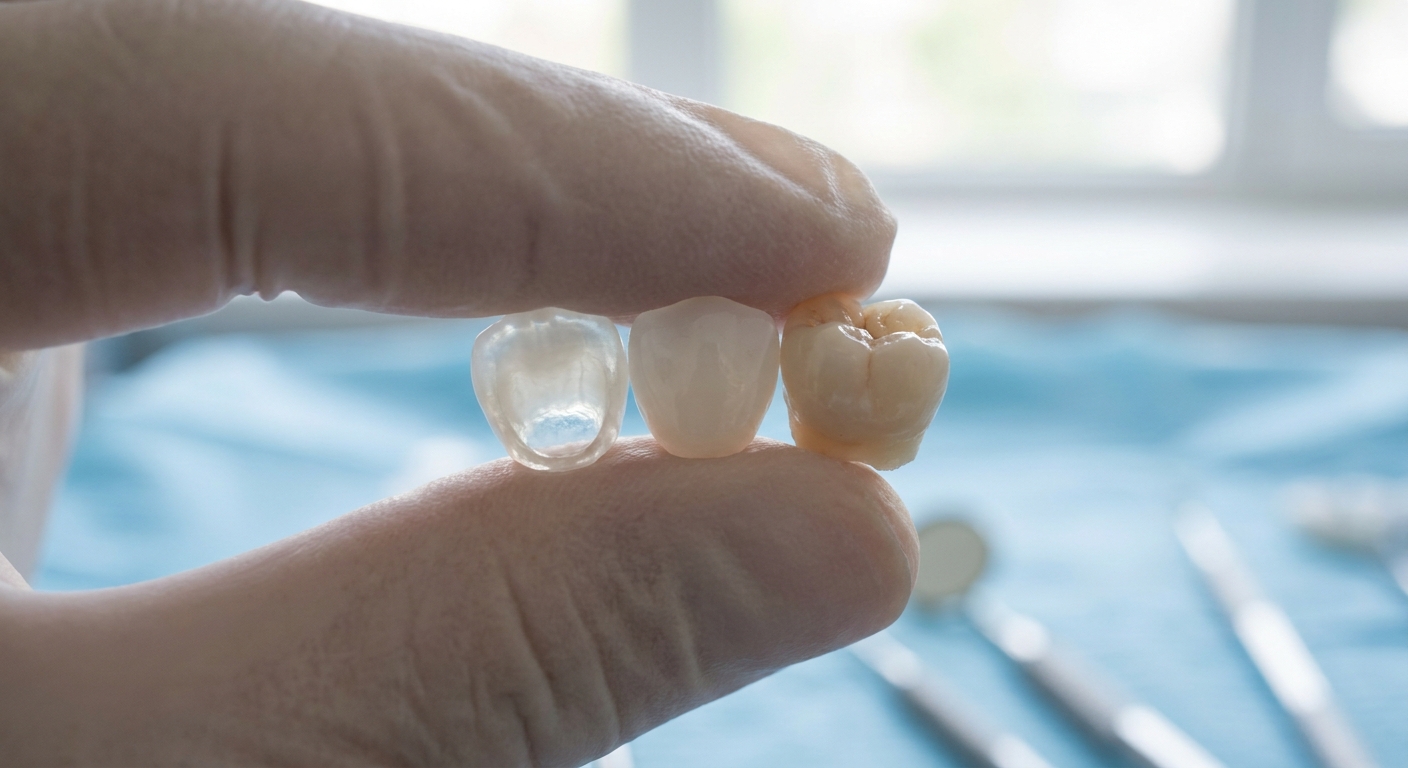
Dental porcelain and ceramic reflect and transmit light in a way very similar to natural enamel. This gives the crown depth and vitality, so it does not look flat or opaque. Layered porcelain can reproduce the subtle translucency at the incisal edge and the warmer tones near the gum.
Zirconia: Strength with Translucency
Zirconia is an extremely strong ceramic that can be made with increasing translucency for front teeth. Modern zirconia crowns combine a strong internal framework with a more translucent outer layer, so they are durable enough for chewing yet still look lifelike. For patients who grind or clench, zirconia may be the best balance of beauty and strength.
Choosing the Right Material for Your Case
We choose the crown material based on where the implant is in your mouth, how much force it will receive, and your aesthetic priorities. A front tooth crown may be made of layered porcelain or high-translucency zirconia, while a back tooth crown may favor strength with a natural shade. The dental laboratory’s skill in layering, staining, and glazing also has a large impact on the final realism.
The Importance of a Skilled Dentist and Advanced Technology
Experience in Cosmetic and Implant Dentistry
Placing an implant and making it look natural requires both surgical and restorative knowledge. The dentist must understand how bone and gum will heal around the implant and how the final crown should emerge. Our team brings more than 40 years of combined experience in placing and restoring implants, which means we have refined the matching process through many thousands of individual cases. This experience shapes how we plan every restoration from the first consultation.
Digital Smile Design and CAD/CAM Technology
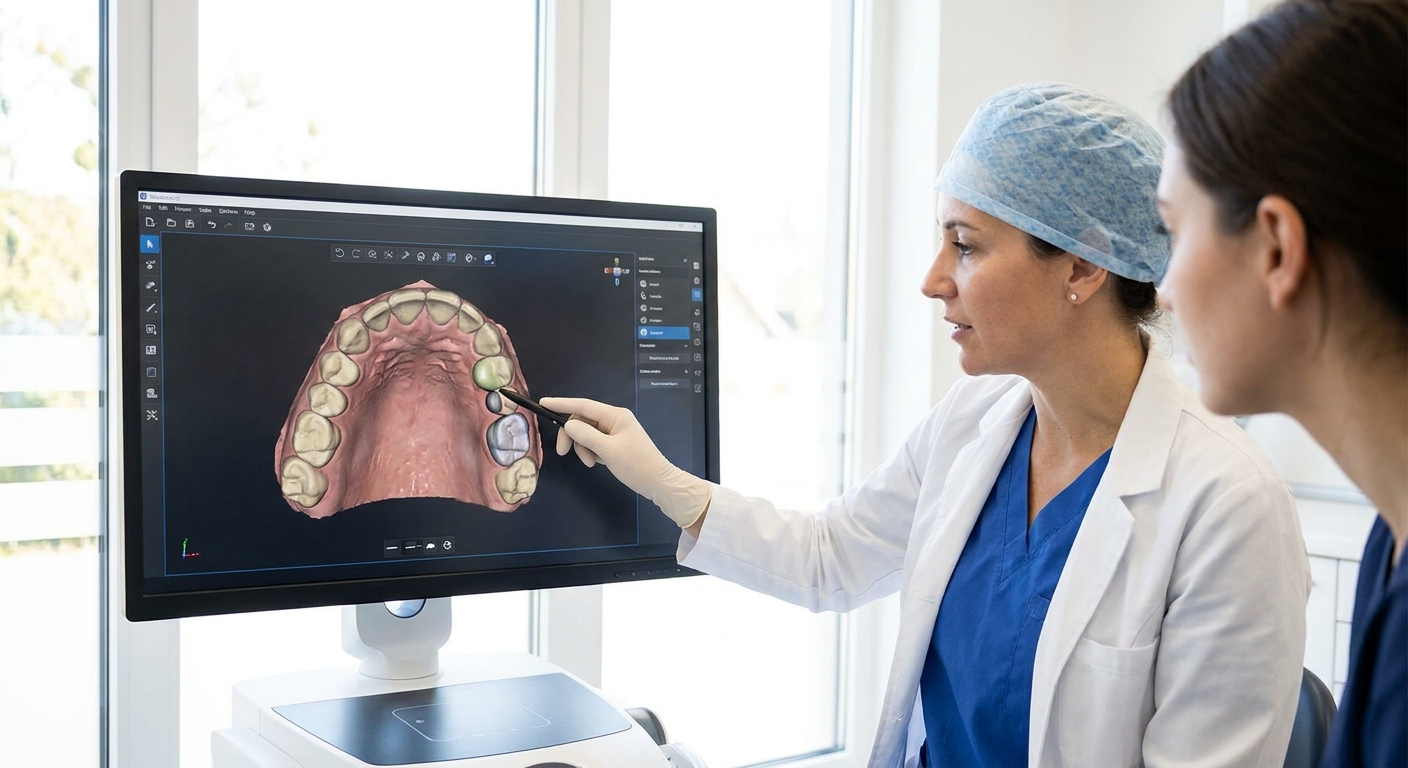
Digital smile design lets us preview the proposed restoration on a photograph of your face before treatment begins. CAD/CAM software then translates that preview into exact crown dimensions, including the emergence profile from the implant. This technology allows micron-level precision that is difficult to achieve with traditional impression materials alone.
Precision Planning for Optimal Results
We often use cone-beam CT scans to evaluate bone volume and choose the ideal implant position for both support and aesthetics. Guided surgery templates transfer that plan to the mouth, reducing the chance of placement error. The result is an implant that supports a crown in exactly the right spot, which is the foundation of a natural smile.
What to Expect During the Matching Process
Initial Consultation and Assessment
We begin with a thorough examination, including photographs, dental X-rays, and an intraoral scan. We ask what you like and dislike about your smile, and we discuss your goals for the implant. This information guides every shade, shape, and texture decision later.
Digital Impressions and Mock-Ups
Instead of messy traditional molds, we usually take digital impressions that capture the exact position and contour of your neighboring teeth and gums. We can then create a digital mock-up or even a physical try-in so you can see the proposed shape and position of the crown before the final restoration is made.
Temporary Restorations and Adjustments
After the implant has integrated with the bone, we often place a temporary crown that mimics the planned final shape. You wear it for a short period, and we ask for feedback on how it feels and looks. We adjust the contour, shade, or bite as needed before the laboratory fabricates the final custom crown.
Why Some Dental Implants Look Fake (And How to Avoid It)
Common Mistakes in Color Matching
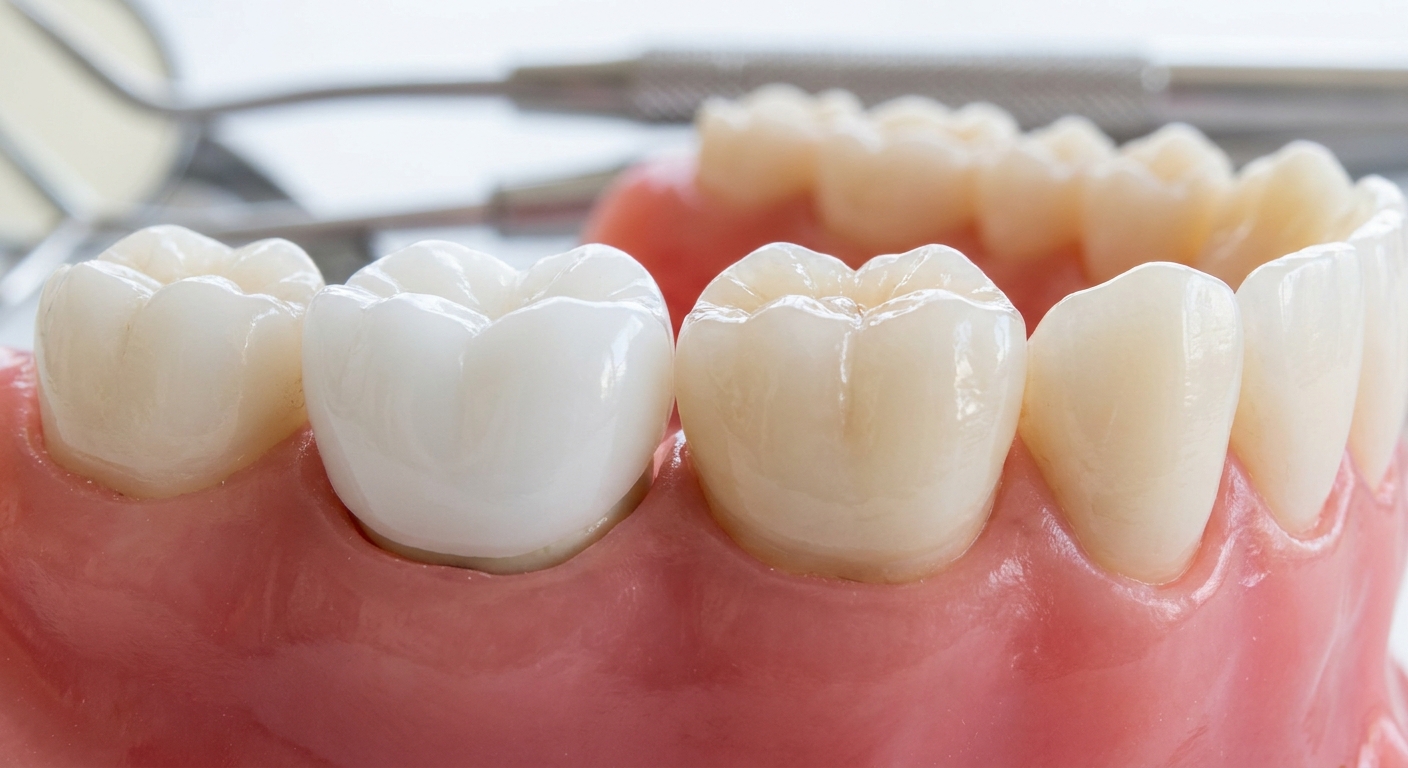
Using a single shade tab without accounting for translucency, making the crown too white, or failing to match the subtle color variations within adjacent teeth all make an implant stand out. We avoid these by mapping color zones and involving a skilled ceramist who layers the restoration by hand.
Poor Gum Integration
If the implant is placed too shallow or too deep, or if the gum recedes after placement, a dark metal margin or a straight, unnatural gumline can appear. We manage the soft tissue from the start, using custom healing abutments and monitoring healing closely to prevent these problems.
Off-the-Shelf vs. Custom Restorations
Stock abutments and pre-made crowns do not match the anatomy of the specific tooth space. They often have a cylindrical shape that looks artificial and may trap plaque. Every implant crown we deliver is custom-designed from your digital scan, including a patient-specific abutment that supports the gum in the most natural way.
Benefits of a Natural-Looking Dental Implant
Boosted Confidence in Your Smile
When your implant matches your existing teeth, you do not have to think about hiding your smile or worrying that someone will notice. This confidence shows in the way you talk, laugh, and interact with others.
Comfortable and Functional Bite
A crown that is shaped and positioned correctly distributes bite forces evenly among your teeth. This reduces stress on the implant and neighboring teeth, making chewing comfortable and preventing abnormal wear or jaw discomfort.
Long-Term Oral Health and Aesthetics
A well-contoured restoration is easier to clean, supporting gum health around the implant. Because the implant also preserves the jawbone, your facial structure remains intact over time. Natural aesthetics are not just about appearance—they are a sign that the restoration is biologically and functionally integrated.
If you are considering a dental implant and want it to blend seamlessly with your smile, schedule a consultation with our team. We will walk through the matching process and show you what is possible for your specific teeth.