


Can you whiten dental implants? The short answer is no. If you have a dental implant and noticed that the crown looks dull, yellowed, or darker than the teeth around it, the crown itself cannot be whitened the way natural enamel can. The colour you see is set at the time the restoration was made, and no bleaching agent will change it.
That does not mean you are stuck with a mismatched smile. Surface stains can often be polished away, and when the discolouration is deeper, the crown can be replaced to match your current tooth shade. We will explain exactly what works, what does not, and how to handle stained crowns or restorations.
Can You Whiten Dental Implants? The Answer
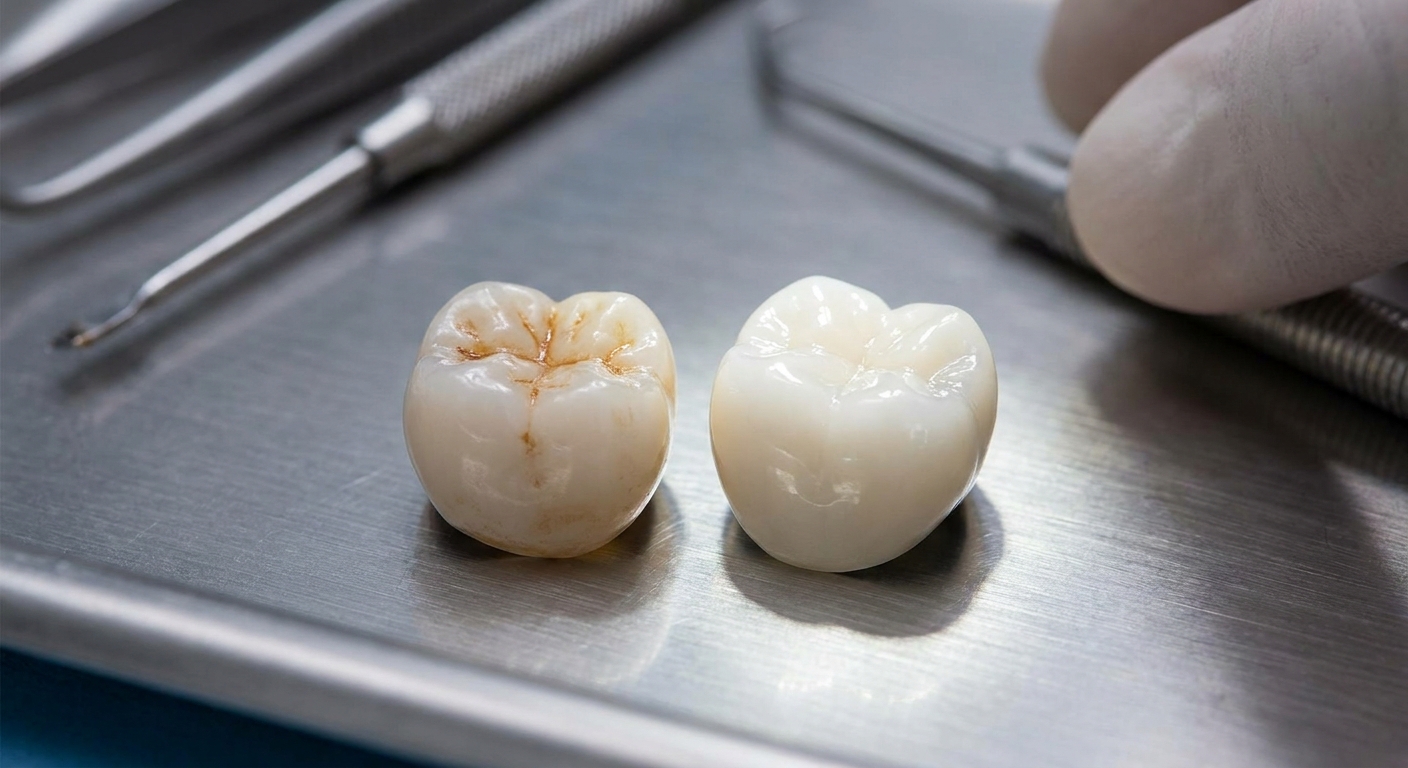
No, you cannot whiten a dental implant crown. The visible part of an implant — the crown — is made from porcelain, zirconia, or occasionally composite resin. These materials are colour-stable and non-porous, so the bleaching agents used on natural teeth simply have no effect on them. Whitening products work by penetrating enamel and breaking down stain molecules. Because an implant crown has no enamel and does not absorb peroxide, nothing you apply to the surface will lighten its shade.
What looks like staining on an implant is usually one of two things: surface stain build-up on the outside of the crown, or a change in the colour of the surrounding natural teeth. Surface stains can often be removed professionally. If the crown itself appears too dark because your natural teeth have been whitened, the solution is replacing the crown — not trying to bleach it.
Why Dental Implants Cannot Be Whitened: Understanding Materials
Porcelain and Zirconia: Non-Porous Materials
Modern implant crowns are almost always made from porcelain or zirconia. Both are ceramic materials fired at high temperatures to produce a dense, glass-like surface. Unlike natural enamel, which contains microscopic pores that can absorb pigments from coffee, tea, or red wine, porcelain and zirconia have an extremely low porosity. This is intentional: it makes the restoration resistant to staining and helps it hold its original shade for many years.
Because the surface is so tightly sealed, stain molecules tend to sit on top rather than penetrate. That is why regular dental polishing can remove most discolouration. But the shade baked into the ceramic cannot be altered from the outside. If the crown was made too dark or has become visibly dull from years of micro-scratches, polishing will not make it whiter.
How Whitening Agents Work on Natural Teeth vs. Implants
Professional teeth whitening uses hydrogen peroxide or carbamide peroxide. These agents release oxygen molecules that travel into the enamel’s pores and break the carbon bonds that create yellow or brown discolouration. The effect is a genuine lightening of the tooth’s internal colour.
An implant crown does not have any of those organic bonds. Porcelain and zirconia are inorganic ceramics. When peroxide is applied to a crown, nothing happens chemically. In fact, using abrasive whitening products or aggressive bleaching gels on an implant can cause micro-scratching, which makes the surface rougher and more likely to collect stain in the future. That is why we never recommend trying to whiten a crown at home.

How to Remove Surface Stains from Dental Implants: Polishing
When Polishing Is Appropriate
Polishing works well when the discolouration sits on the outside of the crown. Common culprits include coffee, tea, red wine, dark berries, tobacco, and even certain mouth rinses that contain chlorhexidine. If you can see a film or a dullness that seems to sit on top of the tooth, a professional polish is the first step we try. It is non-invasive and can restore the crown’s original gloss without changing its structure.
Polishing will not help if the crown’s internal shade is too dark, if there is chipping or wear that has exposed a different layer, or if the crown no longer matches because your natural teeth have been whitened. In those cases, we move to replacement options.
What to Expect During a Professional Polishing
During a hygiene or exam visit, we use a fine-grit polishing paste and a soft rubber cup or brush to remove surface debris and micro-stains. This is the same type of polishing used on natural teeth, but we adjust the pressure and paste to be safe for ceramic. The entire process takes only a few minutes per crown and causes no discomfort. Afterwards, the crown should look noticeably cleaner and shinier, though its base colour will remain exactly the same.
If the implant crown is part of a bridge or connected to other restorations, we may polish all visible surfaces to create a more uniform appearance. We can also show you where stain is accumulating so you can adjust your home care routine between visits.
What to Do When Your Implant Crown Is Stained: Replacement Options
When Replacement Is Necessary
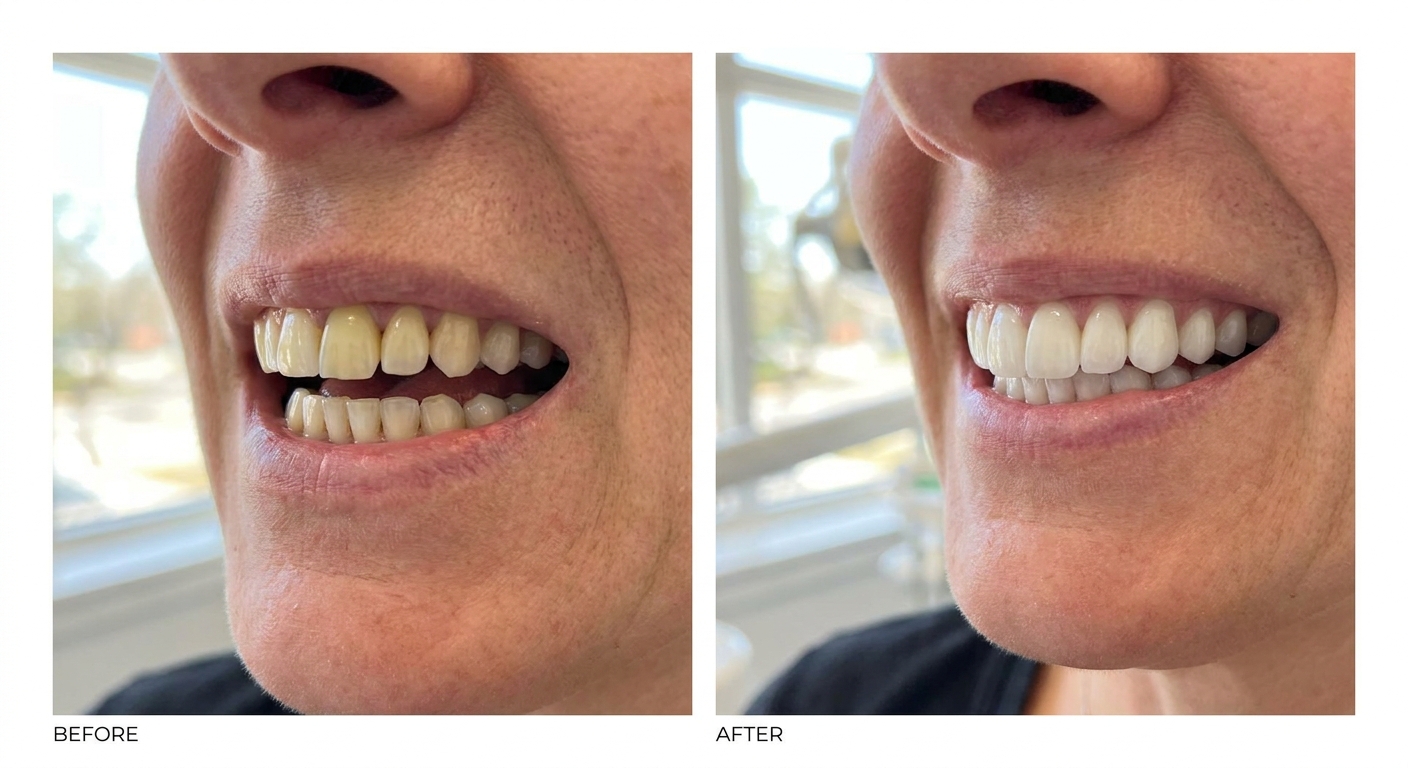
Sometimes polishing is not enough. You may need a new crown if the existing one has deep or intrinsic discolouration, visible wear, chipping, or if it no longer matches the shade of your natural teeth. A common scenario is this: you whiten your natural teeth, they become several shades lighter, and now the implant crown looks yellow or grey by comparison. No amount of polishing will correct that mismatch — the crown must be remade to the new shade.
When we plan an implant crown, we select high-quality porcelain or zirconia specifically because these materials are less likely to change colour or collect surface stains over time. That choice reduces the chance you will need a replacement for staining alone.
The Crown Replacement Process: From Removal to New Placement
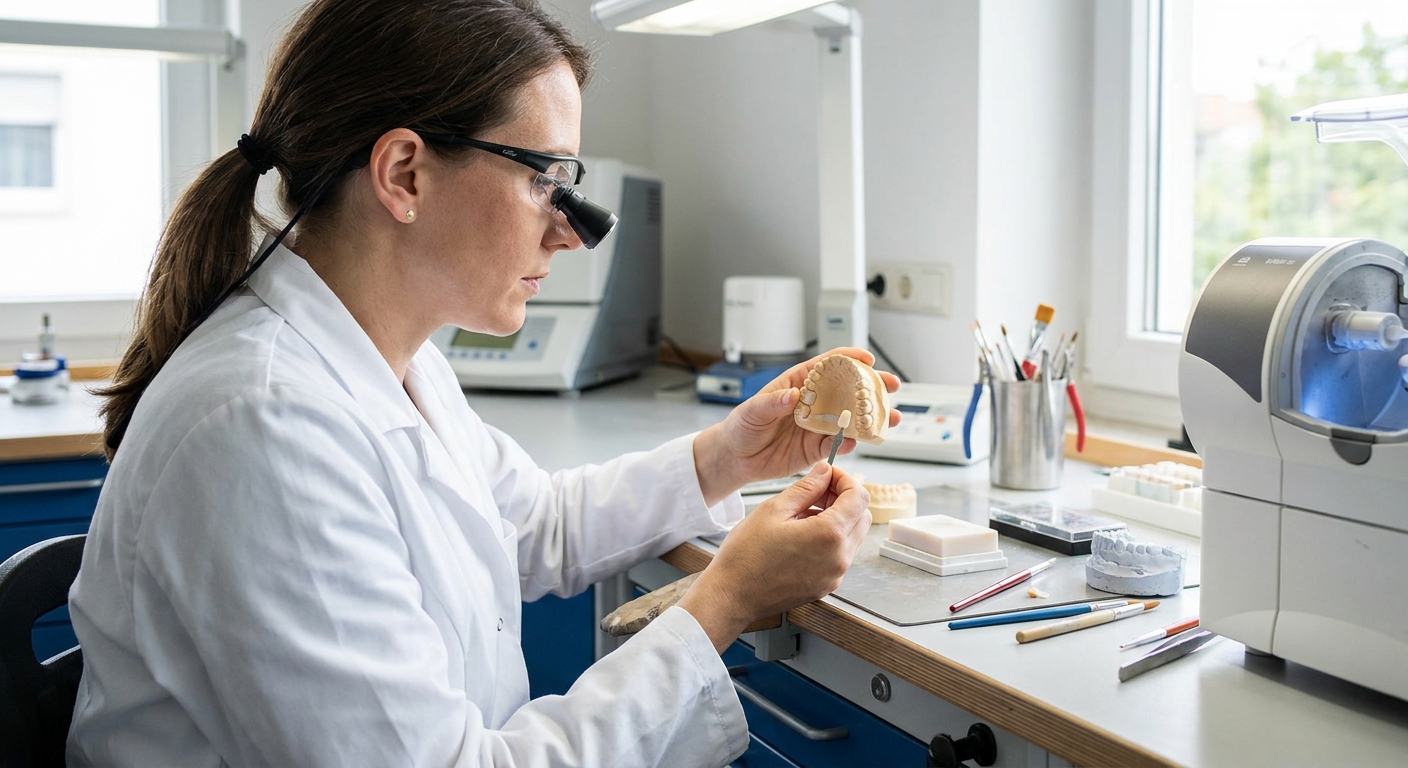
Replacing an implant crown is much simpler than the original implant surgery. The implant post stays in the jawbone; we only remove the visible crown from the abutment. After checking that the implant and surrounding gum tissue are healthy, we take an impression of the abutment and the surrounding teeth. This impression is used to fabricate a new crown in the exact shape and shade you need.
You will typically wear a temporary or healing cap while the new crown is being made. At the final visit, we check the fit, bite, and shade, then secure the new crown onto the abutment. The result is a restoration that matches your current smile. If you have whitened your natural teeth prior to this, we recommend waiting at least two weeks after whitening for the shade to stabilize before we take the final shade match.
Whitening Natural Teeth to Match Dental Implants
The Challenge of Shade Matching
Natural teeth change colour over time from diet, ageing, and lifestyle habits. An implant crown does not. So if you had an implant placed to match your teeth five years ago, and since then your natural teeth have darkened, you might find the crown now looks lighter. Or if you decide to whiten your natural teeth, the crown will remain the same, creating the opposite problem. Shade matching is not a one-time event; it is an ongoing relationship between your natural teeth and your restorations.
For this reason, we often recommend that patients who know they want a brighter smile whiten their natural teeth before committing to a new crown. That way the lab can match the crown to the whitened shade, and both look cohesive from day one.
Whitening Natural Teeth Before Replacing the Implant Crown
The most predictable sequence is this: first, professionally whiten your natural teeth to the shade you want. Wait for the colour to settle — usually one to two weeks. Then have the implant crown replaced to match that new shade. This avoids the frustration of replacing the crown first and discovering it no longer matches after you whiten later.
If you prefer to whiten natural teeth periodically to maintain brightness, you may need to plan for occasional crown replacement whenever the mismatch becomes noticeable. In the front of the mouth, even one shade difference is visible. In the back, small differences matter less. We can help you decide the right interval based on which teeth are visible when you smile and speak.
Preventive Care: Keeping Dental Implants and Natural Teeth Bright
Daily Oral Hygiene for Implant Longevity
The best way to keep an implant crown looking clean is to treat it like a natural tooth — with a few modifications. Use a soft-bristle toothbrush and a low-abrasion toothpaste. Brush twice a day, paying special attention to the gumline where plaque can collect around the abutment. Floss daily, using floss threaders or interdental brushes designed for implants if the contacts are tight.
- Brush all surfaces of the crown and the adjacent natural teeth.
- Use a non-abrasive toothpaste to avoid creating micro-scratches on the ceramic.
- Clean around the implant collar daily with an interdental brush or water flosser if recommended.
- Do not use tobacco products; they stain both enamel and restoration surfaces.
Dietary Habits That Minimize Staining
Even though porcelain and zirconia resist penetration, surface stain can still accumulate from heavily pigmented foods and drinks. To slow this down:
- Limit coffee, black tea, red wine, and dark sodas, or rinse with water immediately after consuming them.
- Be mindful of dark berries, soy sauce, curry, and balsamic vinegar.
- Drink staining beverages through a straw when possible to reduce contact with front teeth and crowns.
- Rinse your mouth with plain water after meals if brushing is not immediately possible.
The Role of Regular Dental Check-ups and Cleanings
Professional cleanings every six months are essential for both natural teeth and implant restorations. During these visits, we remove hardened plaque and polish all visible surfaces, including implant crowns. We also check the margin between the crown and the gumline for cement residue or plaque that can cause inflammation. Early detection of surface dullness allows us to polish before a stain becomes embedded in micro-scratches. Regular exams also let us monitor the shade relationship between your implant and your natural teeth so you can plan any whitening or replacement before the mismatch becomes obvious.
Planning Ahead: Whitening Before Dental Implant Placement
Why Timing Matters for Shade Matching
If you are considering a dental implant and also want a whiter smile, the timing is important. Whitening your natural teeth first means the implant crown can be made to match the lighter shade from the very beginning. If you place the implant first and whiten later, the crown will stay the same while your natural teeth lighten, creating a mismatch that requires replacement.
We recommend completing any professional whitening at least two weeks before the shade is taken for the implant crown. This allows the natural teeth to settle and ensures the lab receives an accurate, stable shade. Rushing this step can lead to a crown that looks different a few weeks after placement.
Consulting Your Dentist About Whitening Before Implant Surgery
During your implant consultation, mention if you plan to whiten your teeth now or in the near future. We can coordinate the sequence. If you are not sure whether whitening is right for you, we can assess the current shade of your teeth and discuss realistic outcomes. This simple conversation can save you the time and effort of replacing a crown later.
If you already have an implant and are thinking about whitening your natural teeth, talk to us first. We can tell you whether the existing crown will still look acceptable after whitening, or whether you should plan for a replacement crown at the same time.
If you have an implant crown that looks stained, dull, or mismatched with your natural teeth, the first step is a professional assessment. We can tell you whether a polish or a replacement crown is the better path, and help you plan any whitening in the right sequence. Book a consultation today to get a clear plan for a brighter, more even smile.