


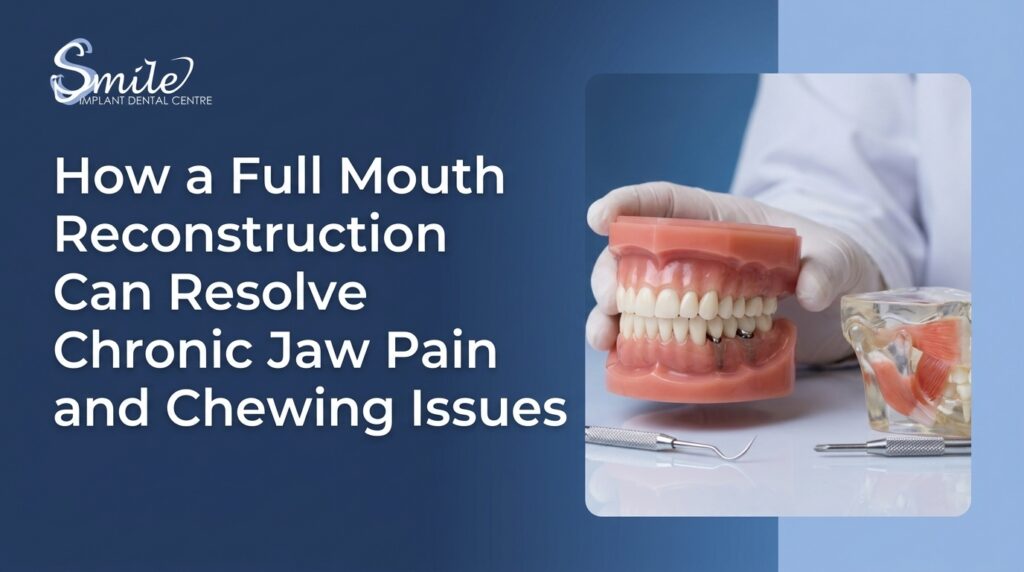
Chronic jaw discomfort and difficulty eating are often treated as isolated problems, but they frequently stem from a collapsing dental foundation. When teeth are missing, severely worn, or misaligned, the entire chewing mechanism is thrown out of balance, forcing the jaw muscles and joints to work overtime. Understanding how a full mouth reconstruction can resolve chronic jaw pain and chewing issues is the first step toward restoring both function and comfort. Rather than applying temporary fixes to individual teeth, a comprehensive reconstructive approach rebuilds the bite from the ground up to ensure long-term harmony.
A full mouth reconstruction is a highly coordinated series of restorative procedures designed to rebuild the complete oral ecosystem. Unlike routine dental work that addresses one cavity or one broken tooth at a time, this comprehensive strategy evaluates the relationship between the teeth, the gums, the jaw joints, and the surrounding facial muscles. The goal is to establish functional harmony. When the upper and lower teeth meet perfectly, the jaw muscles can relax, and the joints can operate smoothly without friction or strain.
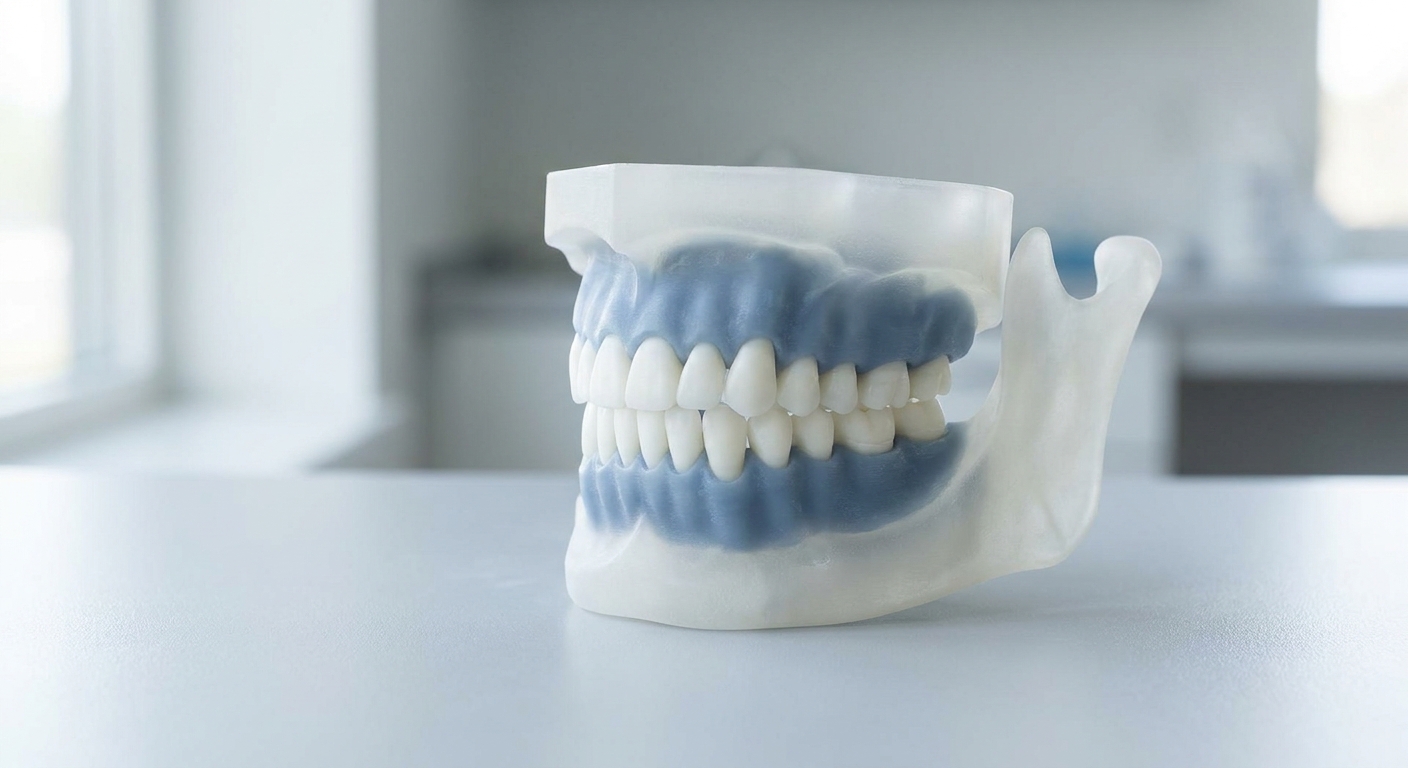
The Hidden Link Between Dental Misalignment and Chronic Jaw Pain
The Role of the Temporomandibular Joint (TMJ)
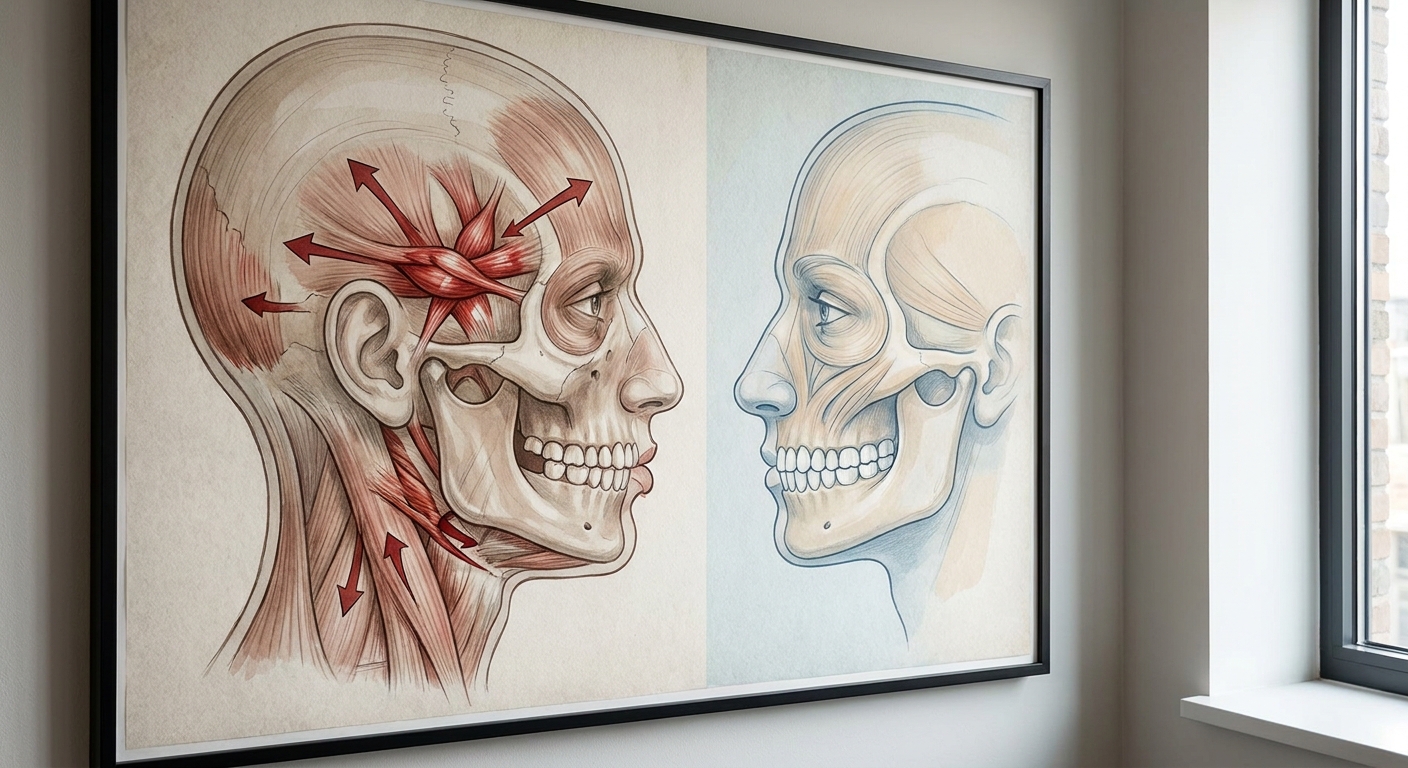
The temporomandibular joint acts as a complex sliding hinge that connects the jawbone to the skull. It is responsible for the intricate movements required to speak, yawn, and chew. When the bite is properly aligned, this joint operates with minimal friction. However, structural dental imbalances—such as missing molars or a shifted bite—force the TMJ out of its natural resting position. This persistent misalignment causes the joint’s cushioning disc to wear down, leading to inflammation, clicking sounds, and radiating pain that often manifests as severe tension headaches.
How Worn Enamel and Uneven Bites Trigger Muscle Tension
Healthy teeth have specific heights and contours that guide the jaw into a comfortable resting posture. When enamel is severely eroded by acid or ground down by years of nighttime teeth grinding, the teeth lose this vertical dimension. As the teeth become shorter, the jaw must close further than nature intended. This over-closure forces the facial and masticatory muscles to remain in a constant state of contraction. Over time, this unrelenting muscle tension radiates through the neck and shoulders, creating a cycle of chronic pain that cannot be resolved without restoring the teeth to their original height and shape.
How Missing and Damaged Teeth Compromise Your Ability to Chew
Jaw Overcompensation and Muscle Fatigue
A complete set of teeth distributes the immense forces of chewing evenly across the jawbone. When teeth are missing or structurally compromised by deep decay, the mouth automatically shifts the workload to the remaining healthy teeth. This subconscious adaptation forces the jaw to move in unnatural, asymmetrical patterns. Chewing exclusively on one side of the mouth overworks the muscles on that side, leading to rapid muscle fatigue, spasms, and a dull, aching sensation that worsens as the day progresses.
The Connection Between Inefficient Chewing and Digestive Health
The digestive process begins in the mouth, where teeth mechanically break down food into manageable particles. When a compromised bite prevents thorough chewing, large, unchewed pieces of food are swallowed, placing an immense burden on the stomach and gastrointestinal tract. This can lead to chronic acid reflux, indigestion, and poor nutrient absorption. By rebuilding a strong, efficient bite, patients not only eliminate oral discomfort but also experience significant improvements in their overall digestive health.
Key Restorative Procedures That Realign the Bite and Relieve TMJ Strain
Dental Implants for Unwavering Structural Support
Dental implants serve as the ultimate foundation for a collapsing bite. By functioning as artificial tooth roots anchored directly into the jawbone, they prevent the bone loss that naturally follows tooth extraction. Implants provide the unwavering structural support necessary to absorb heavy chewing forces, ensuring that replacement teeth do not shift or slip. This stability is crucial for taking the pressure off the TMJ and allowing the surrounding muscles to finally relax.
Crowns and Bridges to Restore Vertical Dimension
For teeth that are severely worn, cracked, or broken down, custom-crafted dental crowns and bridges are utilized to restore their original shape and strength. By placing these restorations over damaged teeth, we can rebuild the vertical dimension of the bite. This precise elevation stops the jaw from over-closing, instantly alleviating the muscle tension and joint strain responsible for chronic jaw pain.
Orthodontic Solutions for Optimal Bite Alignment
In many reconstructive cases, the teeth are generally healthy but positioned incorrectly. Orthodontic treatments, including clear aligners or traditional braces, are carefully integrated into the treatment plan to move teeth into their ideal functional positions. Proper alignment ensures that the upper and lower teeth interlock seamlessly, eliminating the premature contacts and bite interferences that trigger jaw spasms and chewing difficulties.
The Step-by-Step Process to Restoring Jaw Function
Advanced 3D Diagnostic Imaging and Bite Analysis
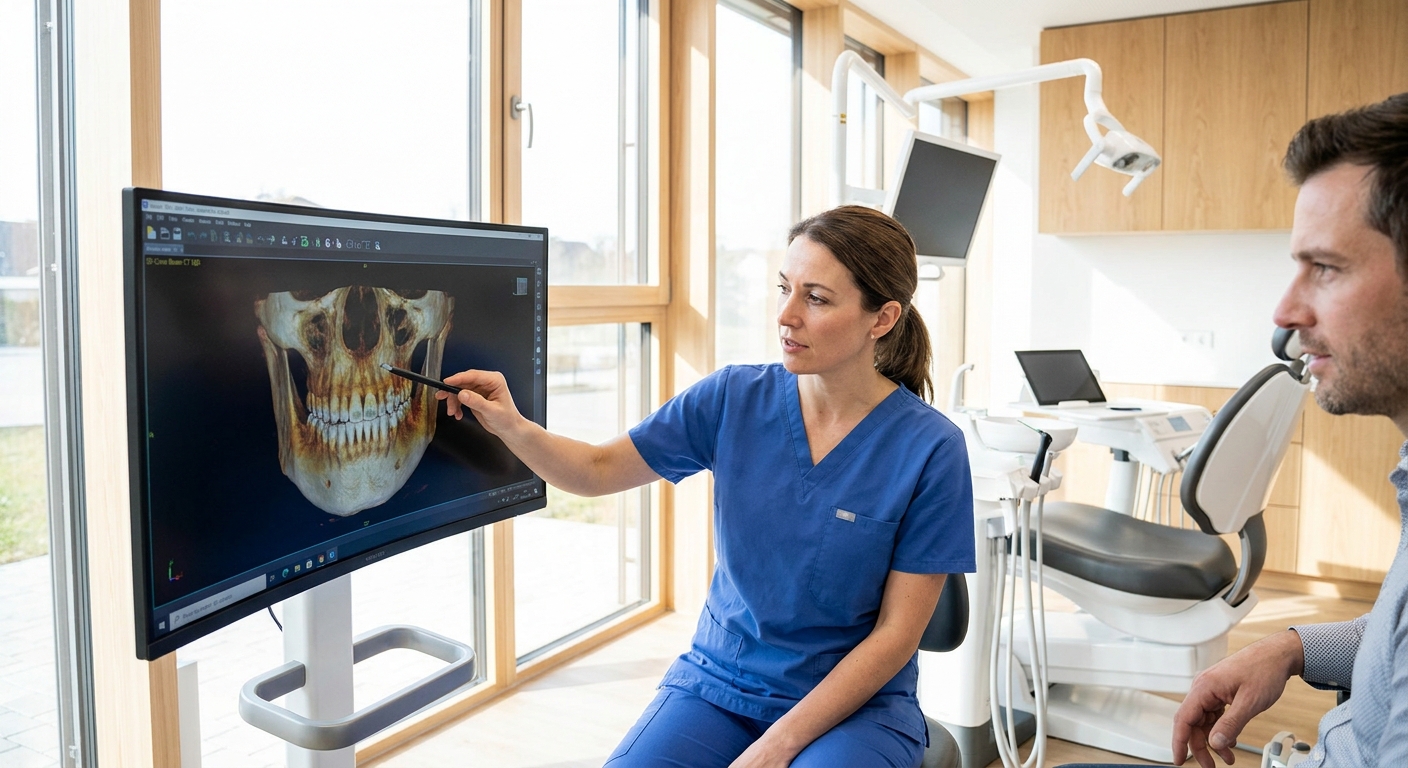
The journey to a pain-free bite begins with comprehensive diagnostics. We utilize advanced 3D cone beam computed tomography and digital intraoral scanners to capture highly detailed maps of the teeth, jawbone, and TMJ pathways. This technology allows for a precise bite analysis, revealing exactly where the structural imbalances lie and how the jaw joints are being compressed during movement.
Designing a Phased, Personalized Treatment Plan
Because every mouth is structurally unique, there is no single template for rebuilding a smile. As a practice with over 40 years of experience in the dental field, we meticulously design phased treatment plans that sequence each procedure for optimal healing and structural integrity. The reconstructive process is carefully mapped out, often beginning with foundational work like addressing active infections or placing implants, followed by the fabrication and placement of the final restorative crowns or bridges.
Final Adjustments for Perfect Functional Harmony
The final stage of reconstruction is dedicated to micro-adjustments. Once the new restorations are in place, we carefully evaluate how the teeth come together during various jaw movements. Even a discrepancy of a fraction of a millimeter can trigger muscle strain. By fine-tuning the biting surfaces, we ensure that the teeth meet simultaneously and evenly, locking in perfect functional harmony and long-term comfort.
Life After Treatment: Experiencing Pain-Free Chewing and Lasting Comfort
Saying Goodbye to Chronic Headaches and Jaw Tension
The most profound change patients notice following a full mouth reconstruction is the dramatic reduction in daily pain. By addressing the root structural causes of TMJ strain, the jaw muscles are finally able to rest. The chronic morning headaches, the sharp pains when yawning, and the constant stiffness in the neck and shoulders gradually fade away, replaced by a lasting sense of physical relief.
Rediscovering the Joy of Effortless Chewing
Beyond pain relief, the restoration of a powerful, balanced bite transforms the simple act of eating. Foods that were once avoided due to pain or missing teeth can be enjoyed again with complete confidence. The teeth function as a cohesive unit, making chewing an effortless and natural process rather than a chore.
Consult with a Specialist to Reclaim Your Oral Health
Living with chronic jaw discomfort and compromised chewing function is not something you have to accept as permanent. If you are struggling with widespread dental wear, missing teeth, or persistent joint pain, a comprehensive evaluation can identify the underlying structural issues. Reach out to schedule a consultation with our restorative team today to discover how a customized reconstructive plan can rebuild your bite, relieve your pain, and restore your quality of life.