


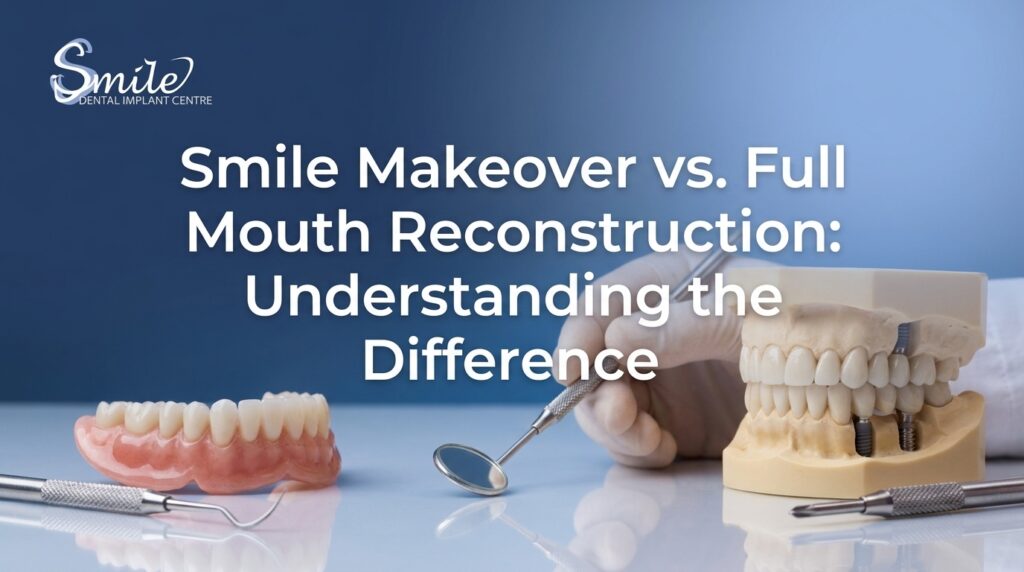
Many patients visit our clinic wanting to dramatically improve the appearance of their teeth, but they are often unsure of the clinical path required to get there. When discussing a Smile Makeover vs. Full Mouth Reconstruction: Understanding the Difference is the most critical first step in your dental journey. While both approaches can result in a beautiful, confident smile, they solve fundamentally different problems and require entirely different diagnostic processes.
Cosmetic dentistry focuses on the visual aspects of your teeth, assuming your bite and oral health are already in excellent condition. Restorative dentistry, on the other hand, is a biomechanical process designed to rebuild the foundation of your mouth. Choosing the wrong path can lead to failing restorations and recurring discomfort, which is why a proper clinical diagnosis is essential before any treatment begins.
Understanding the Smile Makeover: An Aesthetic Approach
A smile makeover is an elective, appearance-driven treatment plan designed to enhance the visual aesthetics of your teeth and gums. The primary goal is to improve symmetry, color, shape, and alignment to create a more attractive and youthful appearance.
The most important prerequisite for a smile makeover is a healthy dental foundation. This means your gums must be free of periodontal disease, your teeth must be free of active decay, and your jaw must function properly without severe bite misalignment. If your oral health is already stable, we can focus entirely on cosmetic enhancements that complement your facial features.

Typical Procedures Included in a Smile Makeover
Because a smile makeover is highly personalized, the specific procedures will vary based on your aesthetic goals. We often combine several of the following treatments to achieve the desired result:
- Teeth Whitening: Professional bleaching treatments to remove deep stains and brighten the overall shade of your enamel.
- Porcelain Veneers: Ultra-thin ceramic shells bonded to the front surfaces of teeth to correct chips, minor gaps, and severe discoloration.
- Cosmetic Bonding: The application of a tooth-colored composite resin to seamlessly repair small imperfections or reshape irregular teeth.
- Gum Contouring: Reshaping an uneven gum line or reducing excess gum tissue to eliminate a gummy smile.
- Clear Aligners: Orthodontic systems used to discreetly straighten mild to moderate crowding or spacing issues.
Understanding Full Mouth Reconstruction: Restoring Oral Health
Unlike a cosmetic makeover, a full mouth reconstruction is a needs-based, function-driven process. It is a comprehensive treatment plan aimed at rebuilding the entire oral cavity after it has been compromised by severe decay, advanced gum disease, traumatic injury, or long-term wear from teeth grinding (bruxism).
The primary objective of a reconstruction is to restore the structural integrity of your teeth and ensure your upper and lower jaws come together in a comfortable, stable bite. This process often takes several months and is carefully sequenced to allow for proper healing and integration of restorative materials.

Common Treatments in a Full Mouth Reconstruction
Reconstructive dentistry utilizes a combination of advanced procedures to save natural teeth where possible and replace those that cannot be salvaged. Having successfully treated more than 150,000 patients, we have seen firsthand how addressing underlying functional issues is critical before any cosmetic work can succeed. Our clinical approach prioritizes preserving your natural tooth structure whenever possible while rebuilding a stable, comfortable bite.
A typical reconstructive treatment plan may include:
- Dental Implants: Titanium posts surgically placed into the jawbone to serve as artificial roots, supporting durable replacement teeth and preventing bone loss.
- Dental Crowns: Custom-crafted caps that cover and protect heavily damaged, decayed, or fractured teeth, restoring their original strength and shape.
- Dental Bridges: Fixed restorations that span the gap left by one or more missing teeth, anchored by healthy adjacent teeth or implants.
- Root Canal Therapy: Treatments to remove infected tissue from inside a tooth, saving it from extraction.
- Periodontal Therapy: Deep cleaning and tissue management to arrest gum disease and provide a healthy foundation for future restorations.
The Core Difference: Appearance-Driven vs. Function-Driven Dentistry
The clearest distinction between these two transformational paths is their underlying motivation. A smile makeover is driven by how you want your teeth to look, while a full mouth reconstruction is driven by what your mouth physically needs to function properly. Cosmetic treatments are an enhancement to an already healthy system; reconstructive treatments are the architectural repair of a failing system.
When a Cosmetic Concern Requires a Reconstructive Solution
Many patients visit us asking for a simple cosmetic fix, such as veneers to lengthen short teeth or bonding to fix recurring chips. However, during the diagnostic exam, we often discover that these visual imperfections are actually symptoms of a deeper functional problem.
For example, teeth that appear short or flat are frequently the result of an unstable bite or chronic nighttime grinding. If we were to simply place porcelain veneers over these teeth without correcting the bite, the same destructive forces would quickly crack or dislodge the new veneers. In these cases, what initially seemed like a cosmetic concern actually requires a reconstructive solution to restore proper jaw biomechanics before any aesthetic work can last.
The Overlap: Can a Reconstruction Also Improve Your Smile’s Appearance?
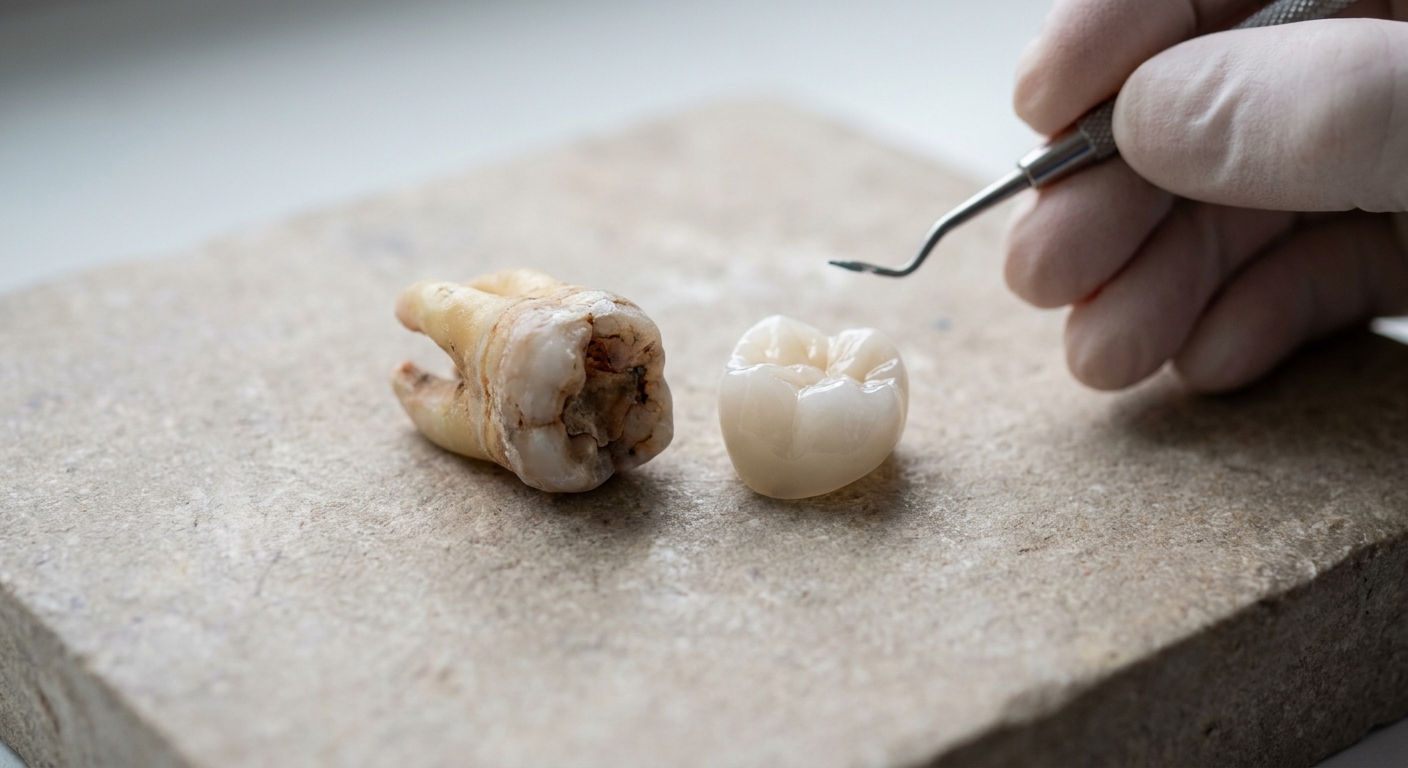
Absolutely. While the primary goal of a full mouth reconstruction is to restore health and function, modern restorative dentistry inherently includes significant aesthetic benefits. We utilize the highest quality, tooth-colored materials for crowns, bridges, and implants.
When we rebuild a collapsed bite or replace missing teeth, the natural byproduct is a dramatically improved smile. In fact, a successful full mouth reconstruction often provides the exact visual enhancements a patient originally sought, but with a stable, functional foundation that ensures the results will last for decades.
Choosing the Right Dental Transformation for Your Needs
Deciding between a cosmetic enhancement and a comprehensive restoration is not a choice you have to make on your own. The only way to know for certain which path is right for you is through a professional diagnostic exam. By evaluating your gum health, jaw function, bite alignment, and the structural integrity of your enamel, we can determine the true root cause of your dental concerns.

Whether you need a few cosmetic adjustments to achieve the smile of your dreams or a full architectural rebuild to chew comfortably again, a customized treatment plan is your blueprint for success. Reach out to our team today to schedule your comprehensive consultation and take the first step toward a healthier, more confident smile.