


Patients often wonder why professional implant maintenance is different from a standard teeth cleaning, especially since dental implants are designed to look, feel, and function just like natural teeth. While your daily brushing and flossing routine remains largely the same, the biological reality of how an implant sits in your jaw requires a completely modified clinical approach.
The materials used to construct your implant, alongside the unique way your gum tissue heals around it, mean that traditional cleaning methods can actually cause irreversible damage. Understanding these differences is the first step in protecting your investment and ensuring your restoration remains stable, functional, and infection-free for decades.

The Biological Difference: How Dental Implants Attach to Gums and Bone
The Absence of a Periodontal Ligament
Natural teeth are suspended in the jawbone by a periodontal ligament (PDL). This network of connective fibers and blood vessels acts as a shock absorber and provides a robust blood supply that delivers immune cells to fight off bacterial infections. Dental implants, however, fuse directly to the jawbone through a process called osseointegration. Because they lack a PDL, implants do not have the same natural defense mechanisms or physical barrier against invading bacteria.
Why the Gum Seal Around Implants is More Vulnerable
Without the periodontal ligament, the gum tissue surrounding an implant forms what is known as a peri-implant mucosal seal. This biological seal is much more fragile than the strong connective tissue attachment found around natural teeth. Because the adhesion is weaker, oral bacteria can more easily break through this barrier and migrate beneath the gumline, making specialized monitoring and maintenance absolutely critical.
Peri-Implantitis vs. Standard Gum Disease: The Risk of Rapid Bone Loss
Understanding Peri-Implant Mucositis
Just as plaque buildup can cause gingivitis around natural teeth, it can trigger an inflammatory response around implants known as peri-implant mucositis. This condition is characterized by red, swollen, and bleeding gums. Fortunately, peri-implant mucositis is reversible if caught early and treated with targeted professional cleaning and improved home care.
How Quickly Infection Can Compromise Implant Stability
If left untreated, mucositis can rapidly escalate into peri-implantitis. Because implants lack the protective blood supply of the PDL, an infection can travel down the implant threads and destroy the surrounding jawbone much faster than standard periodontitis affects natural teeth. This accelerated bone loss can quickly lead to implant mobility and, ultimately, the complete failure of the restoration.
Enamel vs. Titanium: Why Standard Dental Tools Can Damage Implants
The Danger of Stainless Steel Scalers on Titanium
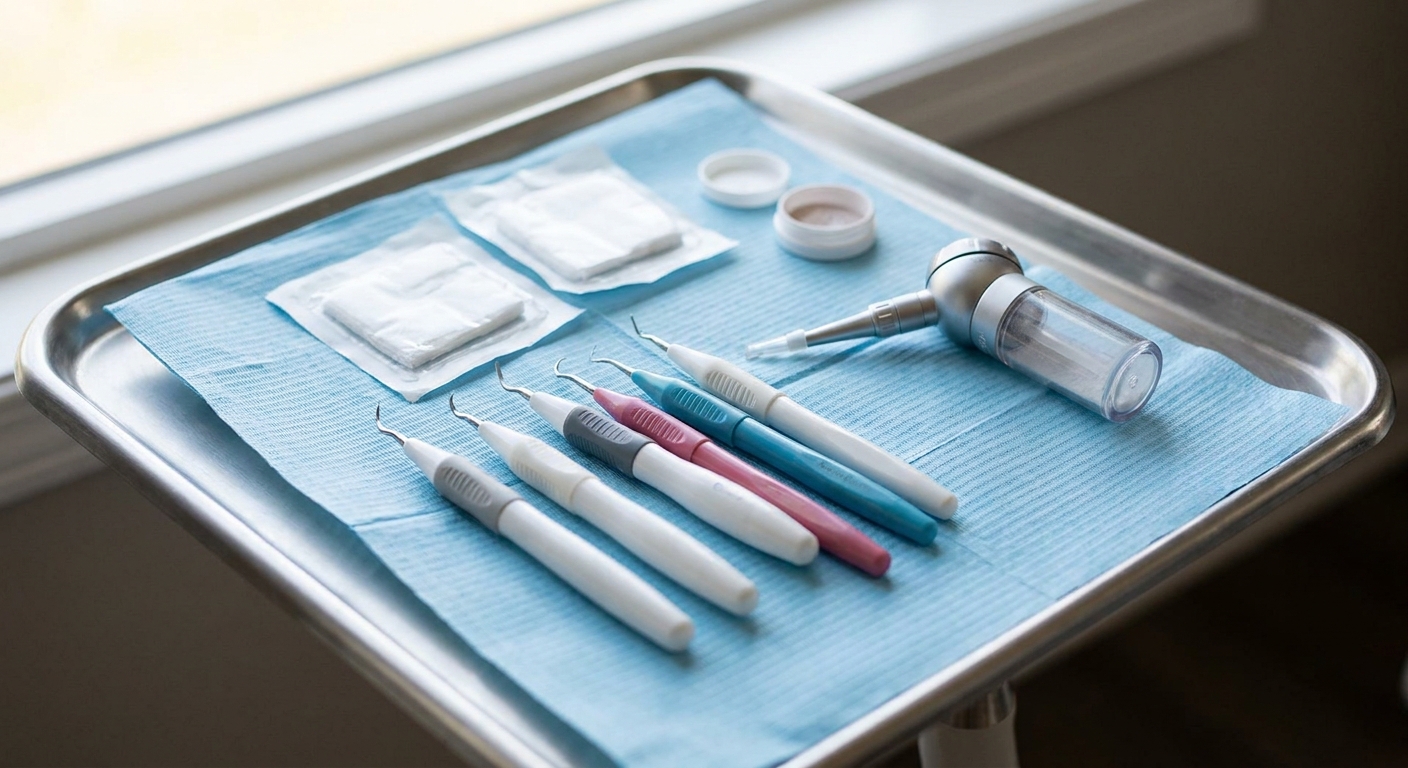
Natural tooth enamel is the hardest substance in the human body, easily withstanding the rigid stainless steel scalers traditionally used to scrape away hardened plaque and calculus. However, implant posts and abutments are typically made of titanium, which is significantly softer than enamel. Using standard metal dental instruments on an implant will inevitably leave deep scratches and gouges on its carefully machined surface.
Preventing Microscopic Hiding Spots for Harmful Bacteria
When an implant surface is scratched, it creates microscopic grooves that act as perfect hiding spots for harmful bacteria. These rough areas make it incredibly difficult to remove biofilm during future cleanings, accelerating plaque accumulation and increasing the risk of infection. Preserving the smooth, unblemished surface of the implant components is a primary reason why professional implant maintenance is different from a standard teeth cleaning.
Specialized Instruments: What Hygienists Use for Implant Maintenance
The Role of Plastic, Resin, and Carbon Scalers
To safely remove calculus without altering the titanium surface, hygienists use instruments made from softer materials. Our lead dentist is a Diplomate of the American Board of Oral Implantology, bringing specialized expertise to our implant maintenance protocols to ensure the highest standard of care. We utilize specialized scalers crafted from high-grade plastics, resins, carbon, or specialized titanium alloys that effectively break away hardened deposits without scratching the implant body.
Protecting the Abutment and Prosthetic Crown
The abutment (the connector piece) and the prosthetic crown must also be treated with care. Maintaining the highly polished finish of these components prevents bacterial adhesion and preserves the aesthetic appearance of your smile. Hygienists are trained to adapt their angles and pressure, using these specialized tools to clean the margins where the crown meets the gumline without compromising the restoration.

Advanced Biofilm Removal: The Role of Subgingival Air Polishing
Using Low-Abrasive Powders Like Glycine and Erythritol
One of the most effective advancements in implant maintenance is subgingival air polishing. Instead of scraping, this technique uses a pressurized stream of water, air, and ultra-fine, low-abrasive powders to gently blast away sticky biofilm. Powders such as glycine or erythritol, which are often as fine as 25 microns, are safe for delicate peri-implant tissues and will not abrade titanium or porcelain surfaces.
Safely Eradicating Plaque from Roughened Implant Threads
If minor bone loss has occurred and the microscopic threads of the implant become exposed, mechanical scaling becomes nearly impossible. The threads are intentionally roughened during manufacturing to encourage bone growth, but this texture acts like a sponge for bacteria if exposed to the oral cavity. Air polishing is uniquely capable of penetrating these porous, threaded surfaces to thoroughly disinfect the area without causing structural damage.
Modified Probing and Radiographic Monitoring Protocols
Gentle Probing Techniques for Delicate Tissues
Measuring the depth of the gum pockets around an implant is essential for monitoring tissue health, but it requires a delicate touch. Because the peri-implant seal is so fragile, hygienists use flexible plastic probes and apply significantly less pressure than they would on a natural tooth. This modified probing technique ensures accurate measurements without accidentally severing the biological seal and introducing bacteria into the deeper tissues.
Tracking Marginal Bone Levels Through Targeted X-Rays
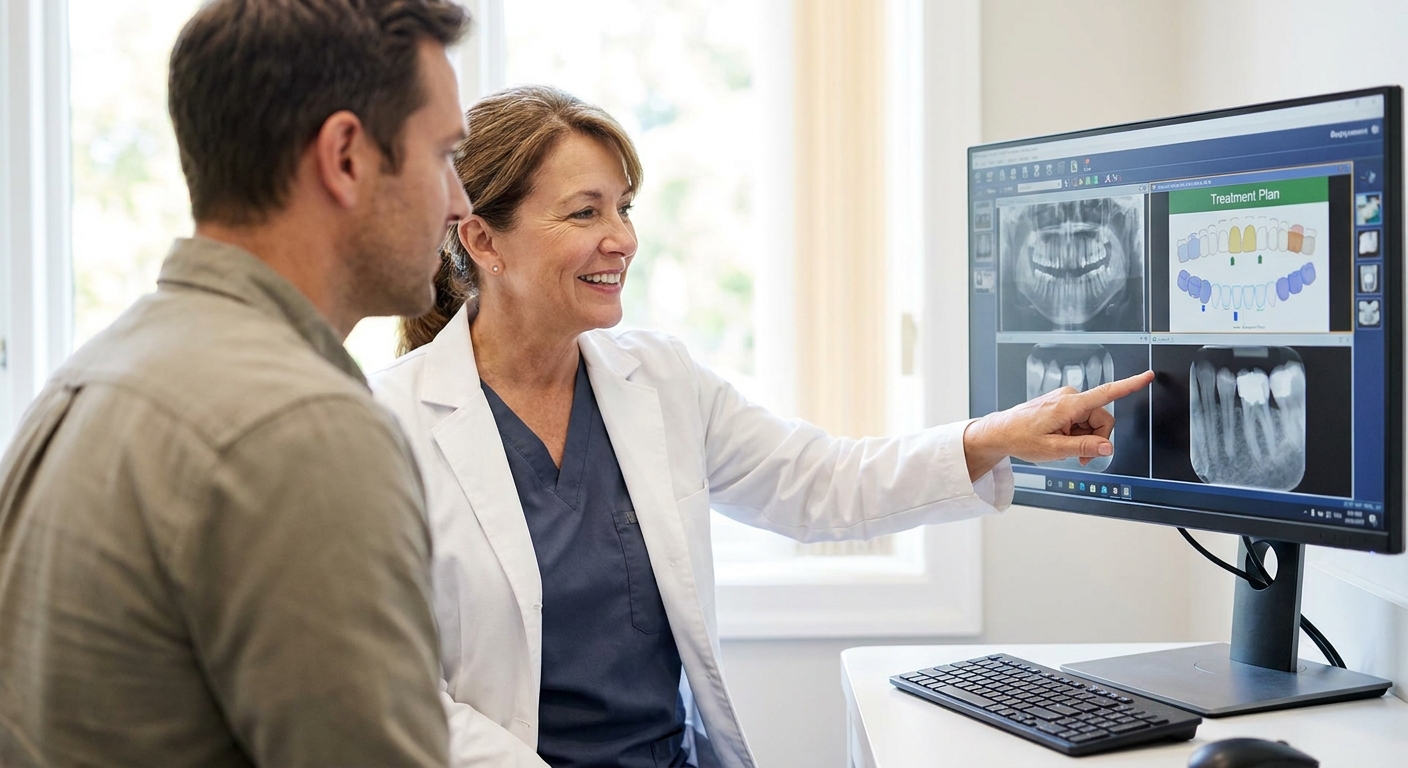
Visual inspections and probing only tell part of the story. Professional implant maintenance relies heavily on radiographic monitoring to evaluate the bone supporting the implant. Key benefits of targeted radiographic monitoring include:
- Establishing a baseline bone level immediately after the implant is loaded.
- Detecting early signs of bone loss before clinical symptoms of peri-implantitis appear.
- Evaluating the structural integrity and fit of the implant abutment and crown.
By comparing current X-rays to baseline images, clinicians can detect millimeter-level changes in the marginal bone, allowing for early intervention before stability is compromised.
Customized Recall Schedules: Why Implants May Require More Frequent Visits
Managing Bacterial Load Proactively
The success of a dental implant relies entirely on keeping the surrounding environment free of destructive bacteria. Patients who have lost teeth due to periodontal disease often carry a higher bacterial load and are naturally more susceptible to peri-implant infections. Proactive management is required to disrupt biofilm before it can calcify into calculus and trigger an inflammatory cascade.
Transitioning from a 6-Month to a 3-to-4-Month Interval
While a standard six-month cleaning interval is often sufficient for healthy natural teeth, the vulnerable nature of the peri-implant seal often necessitates a more frequent recall schedule. Transitioning to a three-to-four-month maintenance interval allows for consistent professional disinfection, ensuring that any early signs of mucositis are treated immediately to preserve the structural integrity of the jawbone.
Conclusion: Securing the Longevity of Your Dental Implants
Understanding why professional implant maintenance is different from a standard teeth cleaning empowers you to take the right steps in protecting your smile. From the fragile nature of the peri-implant seal to the specific non-abrasive tools required to clean titanium, specialized care is the cornerstone of implant longevity.
By adhering to a customized maintenance schedule and ensuring your clinical team uses implant-safe protocols, you can prevent rapid bone loss and keep your restoration functioning flawlessly. Contact us today to schedule your specialized implant maintenance visit and secure the long-term health of your smile.