


When you lose a tooth, the jawbone beneath it begins to resorb or shrink almost immediately due to a lack of stimulation from the tooth root. If you are considering replacing that missing tooth, you might be surprised to learn that your jawbone no longer has the necessary volume or density to support a permanent replacement. This is exactly why you might need a bone graft before getting a dental implant, a routine preparatory step that rebuilds the foundation of your smile.
A bone graft acts as a biological scaffold, encouraging your body to regenerate its own bone tissue in areas weakened by tooth loss, gum disease, or trauma. By restoring the necessary width and height to your jaw, this procedure ensures that the titanium implant post can anchor securely, drastically reducing the risk of implant failure and preserving your natural facial structure.
What Is a Dental Bone Graft and How Does It Work?
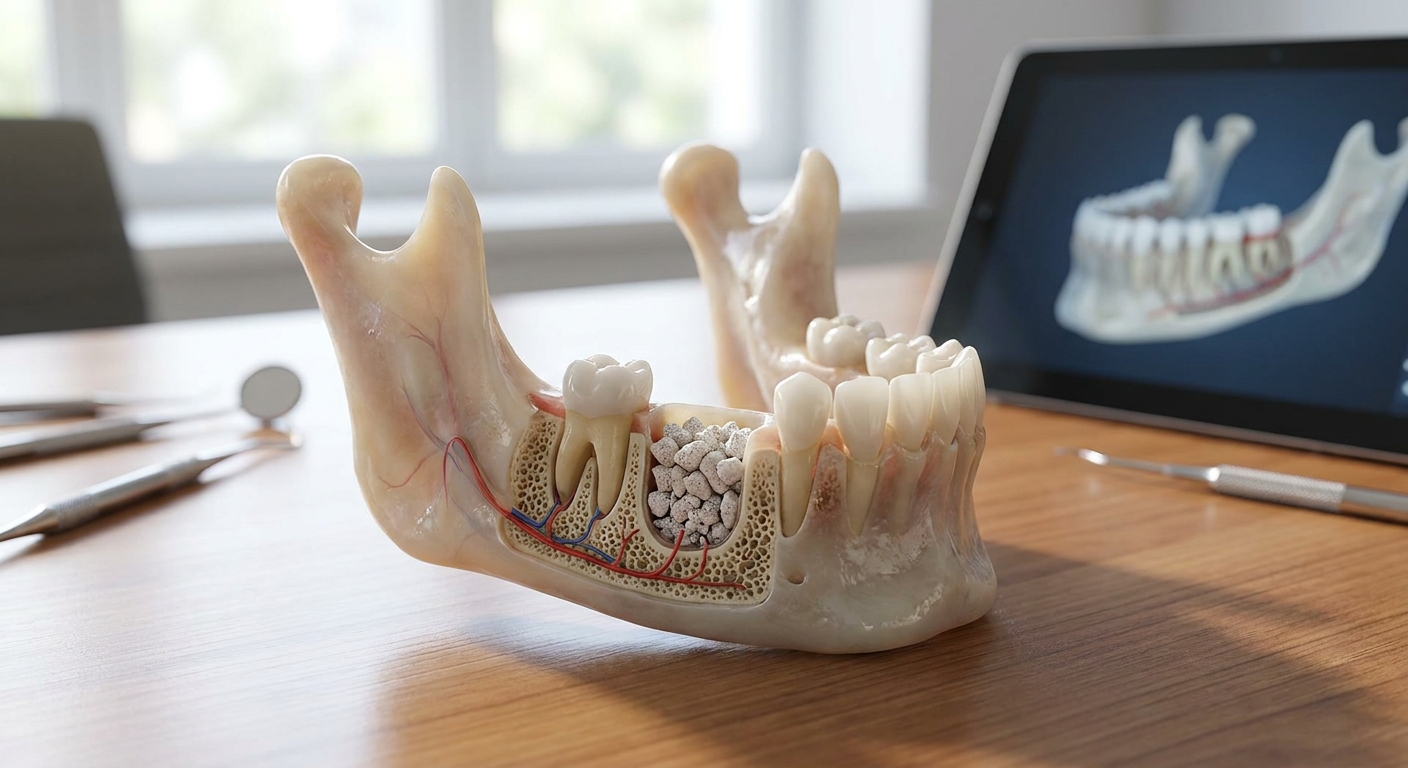
A dental bone graft is a surgical procedure designed to replace missing bone and stimulate the growth of new bone tissue in the jaw. When we evaluate a patient for tooth replacement, we look closely at the 3D imaging of their jawbone. If the bone is too thin or soft, we place grafting material directly into the weakened area.
This material serves as a scaffold or framework. Over the course of several months, your body deposits new bone cells into this framework, eventually absorbing the grafting material and replacing it with your own strong, natural bone. Once this regeneration process is complete, the jaw is strong enough to withstand the surgical placement of an implant.
Why Dental Implants Require a Strong Jawbone Foundation
The Science of Osseointegration
The long-term success of any dental implant relies on a biological process known as osseointegration. Once a titanium implant post is placed into the jaw, the surrounding bone must heal and fuse directly to the microscopic grooves on the metal surface. This fusion is what allows the implant to function exactly like a natural tooth root, capable of withstanding the intense bite forces generated when you chew. Without adequate bone density, osseointegration cannot occur completely, leaving the implant vulnerable to loosening over time.
How Bone Density Anchors the Implant
Think of a dental implant like a screw being driven into a piece of wood. If the wood is thick and sturdy, the screw holds tight. If the wood is thin, brittle, or rotted, the screw will wobble and eventually fall out. Your jawbone functions the same way. We need a specific amount of bone width and height to completely surround the implant threads. A graft provides that critical mass, ensuring the implant is locked securely in place for decades.
Top Signs You May Need a Bone Graft Before Getting Implants
Prolonged Missing Teeth
The most common indicator that you will need a graft is simply the amount of time a tooth has been missing. Without the root to stimulate the surrounding bone during chewing, the body begins to reabsorb the jawbone tissue. This atrophy starts within weeks of an extraction and progresses steadily over the years, often leaving a narrow ridge of bone that is too thin to house an implant.
History of Severe Gum Disease
Advanced periodontal disease is a bacterial infection that attacks the gums and the underlying bone supporting your teeth. The toxins released by these bacteria literally eat away at the jawbone. If you lost your teeth due to gum disease, it is highly likely that the underlying bone has been compromised and will need structural reinforcement before we can proceed with tooth replacement.
Noticeable Changes in Facial Structure
Your teeth and jawbone provide the structural support for the lower third of your face. If you have experienced significant bone loss, you might notice your lips sinking inward, deep wrinkles forming around your mouth, or your chin pointing further forward. These visible changes strongly suggest that a graft will be necessary to rebuild the jaw and restore your natural facial contours.
What Happens If You Skip a Necessary Bone Graft?
Attempting to place an implant into a compromised jawbone carries severe clinical risks. If we bypass a necessary graft, the implant threads may remain exposed or fail to achieve primary stability. This lack of integration often leads to implant failure, requiring surgical removal of the loose implant, which causes even more bone loss in the process. Furthermore, placing an implant in thin bone can increase the risk of nerve damage in the lower jaw or puncturing the sinus cavity in the upper jaw. Taking the time to build a solid foundation is always safer than rushing the treatment.
Types of Bone Grafting Materials Used in Oral Surgery
Autografts: Using Your Own Bone
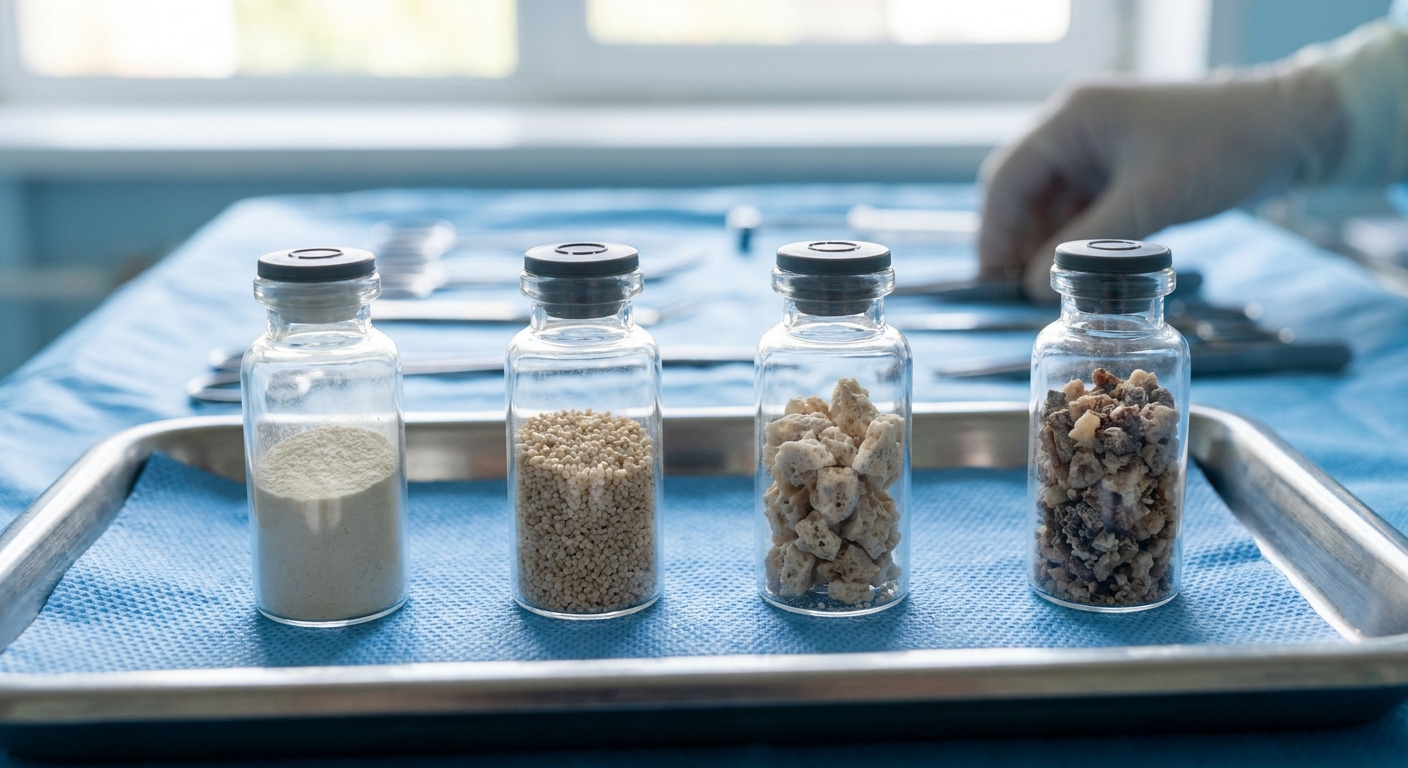
An autograft utilizes bone harvested from another area of your own body, typically the back of the jaw or the chin. Because it contains your own living bone cells, an autograft carries virtually no risk of rejection and promotes rapid healing. However, it does require a second surgical site to harvest the bone.
Allografts and Xenografts: Donor and Animal Sources
An allograft uses processed and sterilized human donor bone from a tissue bank, while a xenograft uses sterilized bone minerals derived from animal sources, most commonly bovine (cow) or porcine (pig). Both materials are exceptionally safe, heavily regulated, and serve as excellent scaffolds for your own bone to grow into without the need for a secondary harvesting surgery.
Alloplasts: Synthetic Bone Substitutes
Alloplasts are man-made, synthetic materials designed to mimic the porous structure of natural bone. Made from biocompatible materials like calcium phosphate, synthetic grafts are an excellent alternative for patients who prefer not to use human or animal-derived tissues. They safely dissolve over time as your body replaces them with natural bone.
Common Grafting Procedures: Sinus Lifts, Socket Preservation, and Block Grafts
Socket Preservation Immediately After Extraction
The most proactive type of graft is socket preservation. Immediately after a tooth is extracted, we pack the empty socket with grafting material and cover it with a protective membrane. This prevents the socket walls from collapsing during the healing phase, preserving the natural ridge of the jaw so an implant can be placed easily a few months later.
Sinus Lifts for Upper Jaw Implants
When replacing upper molars, the bone is often naturally thinner, and the sinus cavity sits just above the roots. A sinus lift involves gently lifting the sinus membrane upward and packing grafting material beneath it to create a thicker floor of bone. As a practice led by a Diplomate of the American Board of Oral Implantology, we evaluate every sinus cavity using advanced 3D imaging to ensure this delicate augmentation is executed with absolute precision.
Block Grafts for Extensive Bone Loss
For patients who have suffered severe trauma or have been missing teeth for many years, the jawbone may have become dangerously thin. In these cases, a block graft is performed. A small block of solid bone is secured to the deficient area with tiny titanium screws, allowing us to rebuild significant width and height before implant placement.
What to Expect During the Bone Grafting Procedure: Is It Painful?
Anesthesia and Sedation Options
A common concern is whether the grafting procedure will hurt. Because the surgery is performed under local anesthesia, you will not feel any pain while the graft is being placed. For patients who experience dental anxiety or are undergoing more extensive grafting, we offer various sedation options to ensure you remain completely relaxed and comfortable throughout the entire visit.
Step-by-Step Surgical Process
Once you are numb and comfortable, we make a small incision in the gum tissue to access the underlying bone. The area is thoroughly cleaned, and the grafting material is carefully packed into the deficient space. We typically place a thin, biocompatible membrane over the graft to protect it and prevent gum tissue from growing into the bone space. Finally, the gums are sutured closed to allow the healing process to begin.
Recovery Timeline and Post-Operative Care Instructions
Immediate Aftercare and Swelling Management
In the first few days following your surgery, it is normal to experience some mild swelling, bruising, and tenderness. Applying an ice pack to the outside of your face in 15-minute intervals can significantly reduce inflammation. We will provide specific pain management protocols, which usually involve over-the-counter anti-inflammatory medications, to keep you comfortable as the initial healing begins.
Dietary Adjustments During Healing
To protect the surgical site, you must stick to a soft food diet for the first week or two. Nutrient-rich foods like smoothies, mashed potatoes, yogurt, and blended soups are ideal. Avoid chewing directly on the side of the mouth where the graft was placed, and steer clear of crunchy, hard, or spicy foods that could irritate the healing gums.
Habits to Avoid for Successful Integration
Certain habits can severely disrupt the bone regeneration process. To ensure your graft heals successfully, you must avoid the following:
- Smoking and Vaping: Nicotine restricts blood flow to the gums and drastically increases the risk of graft failure.
- Using Straws: The suction created when drinking through a straw can dislodge the blood clot protecting the graft.
- Vigorous Rinsing: Spitting forcefully or swishing liquids too hard can disrupt the delicate healing tissue.

The Timeline: How Long After a Bone Graft Can You Get Your Dental Implant?
Patience is essential when rebuilding bone. While your gums will heal in just a few weeks, the bone regeneration underneath takes much longer. On average, you will need to wait three to six months for the graft to fully fuse with your natural jawbone. If you required a larger block graft or a major sinus lift, this healing phase could extend up to nine or twelve months. We will take periodic X-rays during your follow-up visits to monitor the bone density and determine the exact moment your jaw is strong enough to receive the implant.
Are There Alternatives to Bone Grafting for Missing Teeth?
Zygomatic Implants
If you have suffered severe bone loss in the upper jaw and wish to avoid a sinus lift or extensive grafting, zygomatic implants may be an alternative. Instead of anchoring into the upper jawbone, these specialized, extra-long implants anchor directly into the dense zygomatic bone (the cheekbone). This technique provides immediate stability for upper arch restorations.
Short or Mini Dental Implants
In cases where bone height is limited but width is sufficient, short dental implants might be a viable option. These implants are wider and shorter than traditional posts, maximizing surface area without requiring deep bone penetration. Mini implants, which have a much narrower diameter, can also be used in tight spaces or to stabilize lower dentures, though they are generally not suitable for replacing large molars that endure heavy chewing forces.
Next Steps: Consulting with an Oral Surgeon for Your Implant Journey
Understanding why you might need a bone graft before getting a dental implant is the first step toward reclaiming your smile and your oral health. While grafting adds time to the tooth replacement process, it is a proven, routine procedure that ensures your new teeth have the stable foundation they need to last a lifetime. If you are dealing with missing teeth or have been told you lack the bone density for implants, a comprehensive 3D imaging consultation is the best way to determine your specific needs. Schedule an evaluation with our team today to find out how we can rebuild your smile safely and effectively.